
UK Visa Application Mistakes: Common Errors and How to Avoid Them

Applying for a UK visa is an important step for individuals planning to visit, study, work or join their family in the United Kingdom. However, even a small error during the application process can create unnecessary complications. Incorrect information, missing documents, financial evidence problems and misunderstandings about immigration requirements can all affect the outcome of an application. Understanding common UK Visa Application Mistakes before submitting your application can help you prepare more carefully and reduce the risk of avoidable problems. The UK immigration system has different requirements for each visa category. A visitor visa application, for example, involves different eligibility criteria from a Skilled Worker visa or a Spouse Visa application. Applicants must therefore understand the requirements of their chosen route rather than relying on general advice. In this guide, Asher & Tomar Solicitors explain common mistakes applicants should avoid and how proper preparation can help make the application process more straightforward. 1. Choosing the Wrong UK Visa Category One of the most common mistakes is selecting a visa category that does not match the applicant’s actual purpose of travel. The UK offers different immigration routes for visitors, students, employees, family members and people seeking permanent settlement. Each route has specific eligibility requirements and conditions. For example, someone intending to work in the UK should not assume that a Standard Visitor visa allows them to undertake employment. Similarly, a person planning to join their British or settled partner may need to consider the appropriate family visa route. Before starting an application, applicants should establish: Choosing the correct immigration route from the beginning can prevent unnecessary expenses and complications. 2. Providing Incorrect Information on the Application Form Another frequent problem is entering inaccurate or inconsistent information in the online application form. Applicants may accidentally provide incorrect travel dates, passport details, employment information, residential addresses or previous immigration history. Even when an error is unintentional, it may create questions if the information does not match the supporting documents. For example, an applicant may state one employment start date on the application form but provide an employer letter showing a different date. Such inconsistencies can make it more difficult for the decision-maker to assess the application. Applicants should carefully review every section before submission. Names, dates, addresses, employment details and previous visa information should be checked against official records. If an error is discovered after submission, applicants should seek appropriate guidance on how to notify UK Visas and Immigration (UKVI). They should not submit another application automatically without considering the implications. 3. Submitting Incomplete Supporting Documents Supporting documents play an important role in demonstrating that an applicant meets the relevant immigration requirements. A common mistake is submitting an application without checking whether all required evidence has been included. Depending on the visa category, applicants may need to provide: The exact documents depend on the application route and individual circumstances. Missing documents may result in delays, requests for additional information or refusal if the relevant requirements are not demonstrated. Applicants should follow the document checklist provided for their specific visa category and ensure that all evidence is clear, relevant and complete. 4. Failing to Meet Financial Requirements Financial evidence is particularly important for several UK immigration routes. Applicants may need to demonstrate that they have sufficient funds to support themselves or meet a specific income requirement. The amount and type of evidence depend on the visa category. For instance, a Spouse Visa application may involve a financial requirement, while a Student Visa applicant may need to demonstrate sufficient funds for course fees and living expenses under the applicable rules. Common financial evidence mistakes include: Applicants should check the financial rules for their particular route before submitting documents. They should also ensure that the figures on the application form match the supporting financial evidence. 5. Ignoring Previous Visa Refusals or Immigration History Some applicants make the mistake of failing to disclose previous visa refusals, immigration breaches or other relevant information. Immigration application forms may ask questions about previous applications, travel history, refusals and compliance with visa conditions. Providing incomplete answers can create serious difficulties, particularly if the Home Office identifies information that was not disclosed. Applicants should answer all relevant questions honestly and accurately. If they have previously received a refusal, they should review the refusal letter and understand the reasons before preparing a new application. A previous refusal does not automatically mean that every future application will be unsuccessful. However, applicants should address the issues identified in the earlier decision and provide appropriate supporting evidence. 6. Submitting Weak or Inconsistent Financial and Personal Evidence Documents should support the information provided in the application form. A common mistake is submitting evidence that does not clearly establish the applicant’s circumstances. For example, a visitor visa applicant may provide bank statements but fail to explain their employment, regular income or financial commitments. A family visa applicant may provide relationship documents that do not sufficiently demonstrate the circumstances of the relationship. The strength of an application depends on the relevant immigration requirements and the quality of the evidence provided. Applicants should ensure that their documents present a clear and consistent picture of their circumstances. Where an explanation is needed, it should be factual, relevant and supported by appropriate evidence. 7. Failing to Meet English Language Requirements Certain UK immigration routes require applicants to demonstrate their knowledge of English. However, English language requirements differ depending on the visa category, application date and individual circumstances. For example, certain work visa applicants may need to meet a specified CEFR level, while family and settlement routes have their own applicable requirements and exemptions. Common mistakes include using an unapproved test, relying on an expired result where it is no longer acceptable, or assuming that a previous qualification automatically meets the current requirements. Before applying, applicants should check whether an English language test is required and whether their existing qualifications or nationality provide an applicable exemption. 8. Missing Biometrics Appointments or Application Deadlines Completing an online application is not always the final
UK Immigration Rule Changes in 2026: What Applicants Need to Know
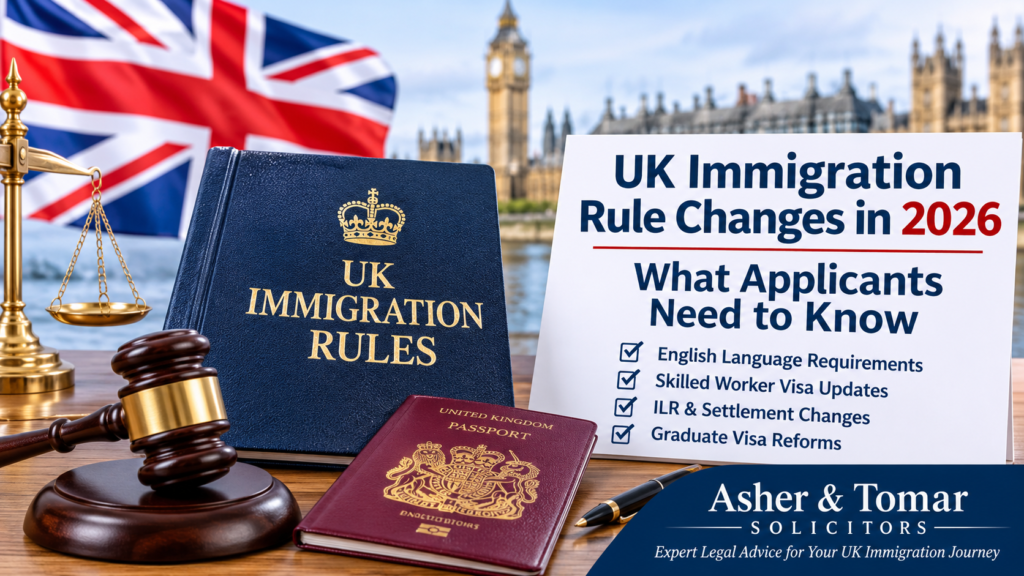
The UK immigration system continues to evolve, and 2026 has brought important changes that applicants, employers, sponsored workers and families should understand before making immigration decisions. From English language requirements and visa eligibility to settlement policies and sponsorship responsibilities, the latest developments may affect people planning to move to the UK or extend their existing permission. Understanding the UK Immigration Rule Changes in 2026 is particularly important for individuals preparing visa applications, Skilled Worker visa holders, international graduates and people working towards Indefinite Leave to Remain (ILR). Some changes have already taken effect, while other significant reforms have been announced for implementation in 2027. Knowing the difference can help applicants avoid incorrect assumptions, prepare suitable documents and make informed decisions about their immigration plans. Understanding the UK Immigration Rule Changes in 2026 The UK Home Office regularly updates immigration policies to manage migration, strengthen compliance and establish requirements for people wishing to live, work or study in the country. In 2026, several developments have affected different immigration routes. These include higher English language standards for certain work visa applicants, changes to immigration administration and new government plans for the settlement system. Applicants should remember that immigration requirements depend on the specific visa category. A change affecting Skilled Worker applicants does not automatically apply to spouse visa applicants, visitors or every person already living in the UK. Checking the latest Immigration Rules before submitting an application is therefore essential. 1. Higher English Language Requirements for Skilled Worker Visas One important development in 2026 concerns English language proficiency. From 8 January 2026, new applicants under the Skilled Worker, Scale-up and High Potential Individual routes generally need to demonstrate English language ability at B2 level under the Common European Framework of Reference for Languages (CEFR), rather than the previous B1 standard. This is an important consideration for applicants who are preparing to work in the UK. Depending on the route and circumstances, applicants may need to provide an approved English language test result or qualify through another accepted method of demonstrating their knowledge. Applicants should check whether their nationality, educational qualifications or previous immigration history provide an exemption. Preparing evidence early can help prevent unnecessary delays or problems with an application. 2. Changes to the Skilled Worker Visa Route The Skilled Worker visa remains an important route for overseas professionals who have received eligible employment offers from approved UK employers. However, the sponsorship system has become more demanding in recent years, with changes to salary requirements, eligible occupations and employer responsibilities. Applicants should pay particular attention to: Employers must also ensure that their recruitment and sponsorship arrangements comply with Home Office requirements. A job offer alone does not guarantee visa approval. Applicants should confirm that all relevant eligibility conditions are satisfied before applying. 3. New Developments in UK Settlement and ILR Rules Settlement and Indefinite Leave to Remain are major areas of immigration policy development in 2026. On 2 November 2026, the government announced an earned settlement model. Under the announced framework, the standard qualifying period for many migrants is expected to increase from five years to ten years, with shorter or longer periods depending on individual circumstances and contribution. The announcement includes proposed settlement periods of three years for certain high earners, five years for some qualifying workers and ten years as the proposed standard route. Longer periods may apply to people who have breached immigration rules. The proposed model also includes additional requirements relating to criminal records, English language ability, outstanding debts to the taxpayer and National Insurance contributions. However, applicants must understand that the announcement does not mean every existing ILR route changed immediately on 2 November 2026. The government has indicated that detailed rule changes will be introduced during 2027. Until the relevant provisions come into force, applicants should assess their eligibility under the rules applicable to their particular route and application date. People approaching their qualifying settlement period should obtain advice before delaying an application because of uncertainty about future policies. 4. UK Graduate Visa Changes: What Students Should Know International students planning to remain in the UK after completing their studies should also follow the latest Graduate visa developments. The government has announced that the standard Graduate visa permission will reduce from two years to 18 months for applications made on or after 1 January 2027. The three-year period for eligible PhD graduates remains relevant. This means students planning to graduate and apply for post-study permission should consider their future employment and immigration options carefully. The Graduate route can provide an opportunity to gain work experience in the UK without employer sponsorship. However, applicants who wish to remain longer may need to explore another eligible immigration route, such as the Skilled Worker visa. Students should check the rules applicable on their intended application date rather than assuming that the previous Graduate visa duration will continue. 5. Changes Affecting UK Employers and Sponsor Licence Holders UK employers recruiting international workers must understand their sponsorship obligations. A sponsor licence allows an eligible organisation to employ overseas workers under applicable sponsored immigration routes. However, holding a licence comes with ongoing compliance responsibilities. Employers should maintain accurate employee records, monitor sponsored workers’ employment circumstances and report relevant changes to the Home Office within the required time limits. Important areas to review include: Failure to comply with sponsorship duties can lead to serious consequences, including licence suspension or revocation. Businesses should regularly review their internal procedures to reduce compliance risks and protect their ability to recruit international employees. 6. UK Family Visa and Spouse Visa Applicants Family immigration continues to be an important part of the UK visa system. People applying for a UK Spouse Visa, Partner Visa or other family-based immigration permission must satisfy the relevant relationship, financial, accommodation and other eligibility requirements. Applicants should prepare suitable supporting evidence, including: Applicants should not assume that changes announced for work visa or settlement routes automatically apply to family visa categories. Each application must be assessed under the rules applicable to that
UK Immigration Solicitor for Settlement
Obtaining settlement in the UK is an important stage for many people who have built their lives, careers and families in the country. A UK immigration solicitor for settlement can provide legal guidance on Indefinite Leave to Remain (ILR), including eligibility, qualifying residence, absences, English language requirements, the Life in the UK Test and supporting evidence. Indefinite Leave to Remain is commonly referred to as settlement. It generally allows an eligible person to live, work and study in the UK without a time limit. There are several routes to settlement, and the requirements can differ depending on the applicant’s immigration history and current visa category. What Is Settlement in the UK? Settlement generally means obtaining Indefinite Leave to Remain. Unlike limited leave to remain, ILR does not normally have a fixed expiry date and allows a person to remain in the UK without needing to extend their visa. A person with ILR can generally live, work and study in the UK and may be able to use public funds where eligible. ILR can also be relevant to a future application for British citizenship, although citizenship has its own separate requirements. The route used to obtain settlement depends on your circumstances. This is why obtaining advice from a UK immigration solicitor for settlement can be useful before submitting an application. Who Can Apply for UK Settlement? There is no single settlement route for everyone. Depending on your circumstances, you may be able to apply for ILR through a qualifying work route, family route, long residence, private life or another route provided for under the Immigration Rules. For example, eligible Skilled Worker applicants may be able to apply after completing five years of qualifying residence and meeting the relevant settlement requirements. The GOV.UK settlement guidance also identifies routes for people with family in the UK and people who have lived lawfully in the UK for 10 years. Settlement Through a Work Visa Many people seek settlement after spending several years working in the UK. Eligible Skilled Worker and certain other work-route applicants may qualify for ILR after five years, subject to the requirements of their particular route. For Skilled Worker settlement, applicants must meet the relevant residence requirements and salary conditions and generally need evidence from their sponsor concerning their continuing employment and salary. A UK immigration solicitor for settlement can review your previous immigration permissions and employment history to help establish whether you are approaching the qualifying point for ILR. Settlement Through Long Residence The long residence route may be available to people who have lived lawfully in the UK for 10 years without gaps in their qualifying continuous residence. The 10-year period can generally include time spent on most immigration categories or a combination of qualifying categories, subject to the Immigration Rules. Applicants usually also need to have held their current permission for one year, although the rules contain specific provisions and exceptions. Long residence applications can require careful examination of previous visas, immigration permissions and periods spent outside the UK. Continuous Residence and Absences Continuous residence is an important consideration for many settlement applications. Your travel history may need to be reviewed to determine whether you have maintained the required residence. The Home Office published updated continuous residence guidance in June 2026 explaining how decision makers assess continuous residence for settlement applications under the routes covered by Appendix Continuous Residence. If you have travelled outside the UK frequently or spent extended periods abroad, it is sensible to calculate your absences carefully before applying. Life in the UK Test and English Language Requirements Depending on the settlement route and your circumstances, you may need to demonstrate knowledge of English and knowledge of life in the UK. For example, applicants under the long residence route aged 18 to 64 generally need to pass the Life in the UK Test and demonstrate the required level of English. The requirements can vary between routes and exemptions may apply. A UK immigration solicitor for settlement can help determine which requirements apply to your particular application. Documents for a Settlement Application The supporting documents required for ILR depend on the route and your circumstances. Evidence may include documents relating to your identity, immigration status, residence, employment, salary, relationship, English language ability or other eligibility requirements. For long residence applications, applicants are required to provide supporting evidence and biometric information as part of the application process. Preparing documents carefully can help ensure that the application presents the relevant evidence clearly and consistently. When Should You Apply for Settlement? The correct application date is important. You should generally apply once you meet the eligibility requirements for your specific settlement route. For example, certain five-year routes allow applicants to apply shortly before completing the qualifying period. The precise earliest application date depends on the applicable route and Immigration Rules. For long residence applications, GOV.UK states that an applicant can submit an application once all eligibility requirements are met and does not need to wait until their current visa expires. Applying too early can create difficulties, so checking the qualifying date before submitting an application is important. What Happens After an ILR Application? The application process normally involves submitting the online application and providing identity and biometric information where required. Supporting evidence must also be provided according to the instructions for the relevant route. GOV.UK states that standard settlement applications generally receive a decision within six months, although processing times can vary and complex applications may take longer. Applicants should also be aware of travel restrictions while an application is pending. For example, travelling outside the UK, Ireland, the Channel Islands or the Isle of Man in circumstances covered by the application rules can result in an application being withdrawn. What If Your Settlement Application Is Refused? An ILR refusal can be concerning because the applicant may need to consider their existing immigration permission and available legal options. The appropriate response depends on the reasons given in the refusal decision. It may be necessary to examine whether the
What Documents Are Needed for a UK Visa Application?
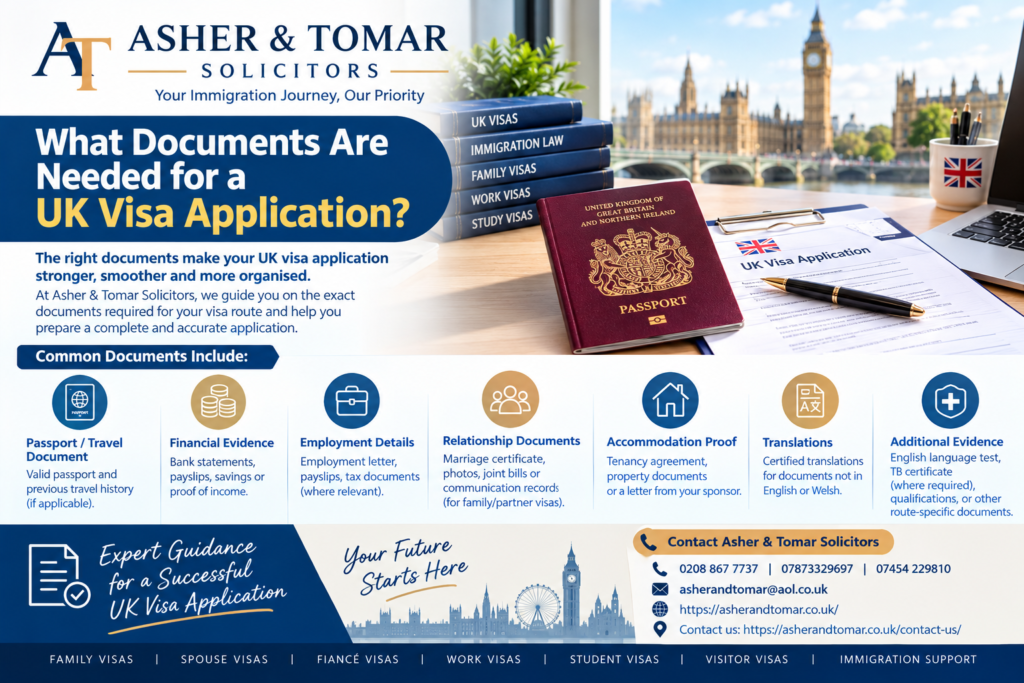
What Documents Are Needed for a UK Visa Application is one of the first questions applicants should consider before starting their immigration process. The documents required will depend on the type of visa, your personal circumstances and the immigration route you are applying under. A visitor visa, spouse visa, fiancé visa, work visa and student visa can all have different evidence requirements. Preparing documents carefully can help make your application more organised and reduce the risk of overlooking important evidence. UK Visas and Immigration may ask applicants to provide supporting documents as part of the application process, and documents that are not in English or Welsh may require certified translations. What Documents Are Needed for a UK Visa Application? What Documents Are Needed for a UK Visa Application depends mainly on the visa category and your individual circumstances. There is no single document checklist that applies to every applicant. In most cases, you should be prepared to provide evidence of your identity, your circumstances and the purpose of your application. Additional evidence may be required to demonstrate finances, employment, family relationships, accommodation, qualifications, sponsorship or other eligibility requirements. The online application process should indicate what documents you need to provide for your specific application. Passport or Valid Travel Document A valid passport or travel document is one of the most important documents for a UK visa application. Applicants will generally need to provide their current passport or another accepted travel document. Depending on the application route, you may also need information or copies relating to previous passports, visas or immigration history. For example, family visa applicants are asked for details about previous immigration applications and copies of relevant passport pages. Before submitting your application, check that the personal information on your documents is consistent with the information entered on your application form. Previous Immigration Documents If you have previously travelled to the UK or made immigration applications, you may need to provide information about your immigration history. This can include previous visas, residence documents, immigration decisions or details of earlier applications. If you have previously received a visa refusal, it is particularly important to understand the reasons for that decision and provide accurate information in any subsequent application. Failing to disclose relevant immigration history can create unnecessary complications. Financial Documents Financial evidence can be an important part of many UK visa applications. The type and amount of evidence required will depend on the specific immigration route. Depending on your circumstances, financial evidence may include bank statements, payslips, employment letters, tax documents, pension evidence, savings evidence or other acceptable proof of income. For example, UK family visa applications may require evidence showing that the relevant financial requirements are met. For partner applications, GOV.UK currently states that the usual minimum combined income requirement is £29,000 a year, although different rules can apply in certain circumstances. Applicants should not assume that the same financial documents work for every visa route. The evidence must match the requirements of the particular application. Employment and Income Evidence If your application relies on employment income, you may need documents confirming your employment and earnings. Depending on the route, this could include payslips, bank statements and an employer’s letter. For family visa applications, GOV.UK gives examples including six months of payslips, bank statements showing income and an employer letter confirming employment and salary details. Self-employed applicants or applicants relying on savings, pensions, rental income or other sources may need different evidence. Relationship Documents for Family and Spouse Visas Applicants applying for a UK spouse or partner visa may need to provide evidence of their relationship. Relevant documents can include a marriage or civil partnership certificate, evidence of living together, joint financial commitments, tenancy documents, utility bills or other evidence demonstrating the relationship. Where partners do not live together, applicants may need evidence showing that they maintain an ongoing relationship. GOV.UK gives examples such as evidence of regular communication, financial support and time spent together. The strongest evidence will depend on the individual circumstances and the specific requirements of the visa route. Documents for a UK Fiancé Visa A fiancé or fiancée visa application can require evidence demonstrating that the relationship is genuine and that the couple intends to marry or enter a civil partnership within the relevant period. Applicants may need relationship evidence, information about previous marriages or civil partnerships and financial evidence where applicable. GOV.UK states that applicants on the fiancé, fiancée or proposed civil partner route must demonstrate that they plan to marry or become civil partners within six months of arriving in the UK. Because family visa requirements can be detailed, professional advice may be useful when preparing the evidence. Accommodation Documents Depending on the visa category, applicants may need to provide information about where they will stay in the UK. This could include a tenancy agreement, property documents, accommodation details or evidence from a sponsor where relevant. The exact evidence required depends on the visa route. For visitor applications, applicants need to provide information about where they plan to stay during their visit. Travel and Visitor Visa Evidence Applicants for a Standard Visitor visa may need to provide information about their planned trip, including travel dates, accommodation and estimated trip costs. Depending on the circumstances, applicants may also need information about their employment, travel history, sponsor, family members in the UK or other relevant details. If another person is paying for the trip, evidence may be needed showing what support is being provided, how it will be provided and that the sponsor has sufficient funds. English Language Evidence Some UK immigration routes require applicants to demonstrate knowledge of the English language. The evidence required can vary depending on the visa category and the applicant’s circumstances. This may involve an approved English language test or another form of accepted evidence. Applicants should check the specific English language requirements applicable to their visa rather than assuming that one type of evidence is accepted for every route. TB Test Certificate Some applicants may need to provide
How Immigration Services Can Help With Your UK Visa Application

How Immigration Services Can Help With Your UK Visa Application is an important question for anyone planning to move to the UK, visit family, study, work, or join a partner. UK immigration applications can involve detailed eligibility requirements, supporting documents, application forms and strict procedures. Professional immigration services can help applicants understand the process, identify the appropriate visa route and prepare their application more carefully. Whether you are applying for a family visa, spouse visa, fiancé visa, visitor visa, work visa, student visa or another immigration route, getting appropriate guidance can help you approach the application with greater confidence. Immigration professionals can review your circumstances, explain the relevant requirements and help you avoid common mistakes that could create unnecessary delays or complications. How Immigration Services Can Help With Your UK Visa Application How Immigration Services Can Help With Your UK Visa Application depends on your personal circumstances and the type of visa you intend to apply for. Every immigration route has its own eligibility requirements, supporting evidence and application process. Professional assistance can help you understand what applies to your situation rather than relying on general information that may not fully match your circumstances. An immigration professional can discuss your objectives, review your circumstances and help identify the most appropriate visa category. This initial assessment can be particularly useful where more than one immigration route may appear relevant. Understanding the Correct UK Visa Route Choosing the appropriate visa category is one of the most important stages of the application process. Applying under an unsuitable route may result in complications, additional costs or a refusal. Immigration services can help explain the differences between available routes and the requirements that may apply. For example, someone planning to join their British or settled partner may need to consider a family visa route, while another applicant may require a work, study or visitor visa. Professional guidance can help you understand the purpose of each route and whether your circumstances appear to meet the relevant requirements. Checking Your Eligibility Before submitting a UK visa application, it is important to understand whether you meet the requirements for the specific immigration route. An immigration adviser or solicitor can review relevant information such as your relationship, finances, accommodation, immigration history, employment, sponsorship arrangements and other supporting circumstances where applicable. A structured eligibility review can identify potential concerns before an application is submitted. This gives applicants an opportunity to address missing evidence or obtain appropriate advice rather than discovering an issue after submission. Help With Supporting Documents Documentation is an important part of many UK visa applications. Depending on the visa category, applicants may need to provide evidence relating to identity, finances, accommodation, employment, relationships, sponsorship, qualifications or previous immigration history. Immigration services can help applicants understand which documents may be relevant to their particular application. They can also help organise supporting evidence so that the application is easier to review. Good document preparation is about more than simply providing a large number of documents. The evidence should be relevant, consistent and appropriate for the requirements of the immigration route. Assistance With Completing the Application UK visa application forms can contain detailed questions about an applicant’s personal circumstances and immigration history. Incorrect, incomplete or inconsistent information can create avoidable problems. Professional immigration services can provide guidance when completing the application and help applicants understand questions that may require additional consideration. This can be especially useful when an applicant has a complicated immigration history, previous refusal or unusual circumstances. The applicant remains responsible for providing truthful and accurate information, but professional guidance can make the preparation process more structured. Reviewing an Application Before Submission A final review can be a valuable part of the visa preparation process. Immigration professionals may check whether the application is consistent with the supporting evidence and whether important information has been overlooked. A review may also help identify inconsistencies between different documents or information entered into the application form. Correcting potential issues before submission is generally preferable to dealing with them after an application has already been submitted. Support for Family and Partner Visa Applications Family and partner visa applications can involve detailed requirements because applicants often need to demonstrate their relationship and satisfy other relevant conditions. For spouse, partner or fiancé visa applications, professional immigration services can help applicants understand the evidence that may be required and how their circumstances fit within the relevant immigration route. Where a person intends to marry in the UK and later move to another family visa route, obtaining advice about the available process can also help them plan their immigration journey more effectively. Help With Previous Visa Refusals A previous visa refusal does not necessarily mean that every future application will be unsuccessful. However, understanding why an earlier application was refused is important. Immigration professionals can review a refusal decision and explain the issues identified in the previous application. Depending on the circumstances, they may advise whether a new application, administrative review, appeal or another available option should be considered. Each case is different, so applicants should obtain advice based on their individual circumstances rather than assuming that the same solution applies to every refusal. Avoiding Common Application Mistakes Small errors can create unnecessary complications in an immigration application. Common issues can include missing documents, inconsistent information, unclear evidence, incorrect application details or misunderstanding the requirements of a particular visa category. Professional immigration services can provide a second level of review and help applicants approach the process systematically. This does not guarantee a successful outcome, as visa decisions are made according to the applicable immigration rules and the evidence provided. However, careful preparation can help applicants submit a more organised and complete application. Why Choose Professional Immigration Services? Choosing professional immigration services can be beneficial when you want clear guidance throughout the visa process. An experienced immigration professional can explain complex requirements in straightforward language, help identify relevant evidence and provide support during application preparation. Professional assistance can be particularly valuable where the case involves previous refusals,
Immigration Solicitor for Fiancé Visa

An immigration solicitor for fiancé visa applications can help couples understand the UK immigration process before making an important life decision. The UK fiancé visa route is designed for eligible overseas nationals who intend to marry or enter into a civil partnership with a person settled in the UK or holding qualifying immigration status. Although the application may appear straightforward, applicants must meet specific relationship, financial, accommodation and English language requirements. Professional legal advice can help identify potential difficulties, organise supporting evidence and prepare a clear application that reflects the couple’s circumstances. Immigration Solicitor for Fiancé Visa: Understanding the UK Route The fiancé visa allows an eligible applicant to come to the UK for the purpose of getting married or entering into a civil partnership within the permitted period. The applicant must normally intend to marry their partner in the UK and must demonstrate that the relationship is genuine and continuing. The application also requires evidence that the couple intends to live together permanently after marriage or civil partnership. A fiancé visa is different from a spouse visa because it is intended for couples who have not yet married. It is also different from a visitor visa, which generally does not allow a person to come to the UK to marry and remain permanently under the family route. An experienced immigration solicitor can explain which route is appropriate and whether the applicant’s circumstances meet the relevant requirements. Immigration Solicitor for Fiancé Visa: Main Eligibility Requirements Genuine and Continuing Relationship Applicants must show that they are in a genuine relationship with their UK-based partner. Evidence may include photographs, travel records, communication history, details of visits, engagement information and statements explaining how the relationship developed. The evidence should be consistent and should reflect the couple’s real circumstances rather than relying on unnecessary or repetitive documents. Intention to Marry in the UK The couple must normally intend to marry or enter into a civil partnership in the UK during the fiancé visa permission period. Evidence may include provisional ceremony arrangements, correspondence with a register office, venue information or a written explanation of the intended plans. The application does not always require every wedding detail to be finalised, but the intention must be credible. Financial Requirement The applicant and their partner must usually meet the applicable financial requirement. This may be demonstrated through employment income, qualifying savings or other permitted sources of funds. The evidence required depends on the financial circumstances, employment history and type of income being relied upon. Incorrect payslips, missing bank statements or inconsistent figures can create avoidable problems, so careful checking is important. Accommodation The couple must show that they have suitable accommodation in the UK. The accommodation should not create overcrowding or breach relevant housing requirements. Supporting evidence may include tenancy documents, property ownership records, a landlord’s letter or other suitable proof of where the couple intends to live. English Language Requirement Many fiancé visa applicants must meet an English language requirement unless an exemption applies. The applicant may need to provide an approved English language test result or evidence of another accepted form of qualification or exemption. A solicitor can help determine which evidence is suitable before the application is submitted. Immigration Solicitor for Fiancé Visa: Documents and Evidence A strong fiancé visa application depends on accurate and well-organised documentation. Common evidence may include the applicant’s passport, the UK partner’s passport or immigration status documents, relationship evidence, financial records, accommodation documents and proof of English language ability. The couple may also need to provide details of previous marriages, civil partnerships or immigration applications where relevant. Every document should be checked for accuracy, dates and consistency. Names should match across passports, certificates and application forms. Financial documents should cover the required period and should be presented in a clear order. Where documents are not in English or Welsh, an appropriate translation may be required. An immigration solicitor can prepare a document checklist tailored to the applicant’s situation and identify gaps before submission. This can be particularly helpful where the couple has lived in different countries, has limited relationship evidence or relies on savings and non-standard income. Immigration Solicitor for Fiancé Visa: Common Application Problems Fiancé visa applications can face difficulties for several reasons. Common concerns include insufficient evidence of a genuine relationship, unclear marriage plans, financial documents that do not meet the rules, unsuitable accommodation evidence and mistakes in the online application form. Previous visa refusals, overstaying, criminal convictions or inconsistencies in immigration history may also require careful explanation. Applicants should avoid submitting documents simply because they are available. Evidence should be relevant, reliable and connected to the requirements of the route. A large volume of poorly organised documents may be less helpful than a concise and clearly explained application. Legal advice before submission can help applicants understand possible risks and decide whether additional evidence or an explanatory statement is necessary. Immigration Solicitor for Fiancé Visa: After Marriage A fiancé visa normally provides a limited period in which the applicant can marry or enter into a civil partnership in the UK. After the marriage or civil partnership, the applicant may be able to apply to switch to the spouse or partner route, provided the relevant requirements are satisfied. The spouse visa application may involve updated financial evidence, accommodation documents, relationship information and confirmation that the couple intends to live together permanently in the UK. The applicant should not assume that the fiancé visa automatically changes into a spouse visa. A separate application is generally required, and it is important to apply before the existing permission expires. Planning the Switch from Fiancé Visa to Spouse Visa Planning ahead can make the transition easier. Couples should keep records of their marriage or civil partnership, continue maintaining evidence of their relationship and review the financial and documentary requirements well before the fiancé visa expires. An immigration solicitor can advise on timing, eligibility and the evidence needed for the next stage. Immigration Solicitor for Fiancé Visa: How Asher & Tomar Solicitors Can
Detention Centre Rule 35

Rule 35 of the Detention Centre Rules 2001 provides an important safeguard for vulnerable individuals held in immigration detention (Detention Centre Rule 35). Its purpose is to ensure that particularly vulnerable detainees are brought to the attention of those with direct responsibility for authorising, maintaining and reviewing detention. In particular, Rule 35(1) requires a medical practitioner to report where a detained person’s health is likely to be injuriously affected by continued detention or by any conditions of detention. Rule 35(2) applies where a medical practitioner suspects that a detained person has suicidal intentions. The information contained in a Rule 35 report must therefore be considered by the Home Office when determining whether continued detention remains appropriate. The current Home Office guidance expressly confirms that Rule 35 reports provide information for consideration under the Adults at Risk in Immigration Detention (“AaR”) policy. The present circumstances give rise to very serious concerns regarding the detainee’s physical and psychological vulnerability. The detainee’s health is deteriorating day by day. He is experiencing significant weight loss, severe weakness, dizziness, difficulty sleeping, severe anxiety, depression, distress and persistent negative thoughts. He has also reported serious difficulties with eating and sleeping and has described episodes of feeling that he may faint. Of particular concern is his report that he has, at times, experienced thoughts of taking his own life. These matters cannot properly be treated as ordinary complaints arising from the discomfort of detention. They are indicators of significant vulnerability requiring urgent medical and mental-health assessment. The AaR policy requires the Home Office to identify whether an individual is an adult at risk and, if so, to assess the level of evidence supporting that vulnerability. The policy distinguishes between Level 1 evidence, consisting principally of a self-declaration, Level 2 evidence supported by professional or official evidence, and Level 3 evidence where professional evidence indicates both vulnerability and that detention is likely to cause harm or worsen the person’s condition. Level 3 evidence is to be afforded significant weight (Detention Centre Rule 35). Importantly, the current detention centre Rule 35 guidance states that a Rule 35(1) report concerning a detained person’s health being likely to be injuriously affected by continued detention or the conditions of detention will normally amount to Level 3 evidence for the purposes of the AaR policy. Accordingly, if the detainee’s medical condition has deteriorated in detention and there is professional evidence that continued detention is likely to exacerbate his condition, the Home Office must give that evidence significant weight when reviewing continued detention. The courts have repeatedly emphasised the importance of compliance with the Home Office’s own detention policies. In R (IO (Nigeria)) v Secretary of State for the Home Department [2018] EWHC 2940 (Admin), the High Court considered the AaR policy and confirmed that there is a clear presumption that persons identified as being at risk will not be detained. That presumption is not absolute, because detention may remain justified where immigration-control considerations outweigh the evidence of vulnerability. However, the greater the weight of evidence demonstrating that an individual is at risk, the weightier the immigration considerations must be before continued detention can properly be justified. Similarly, in R (MD) v Secretary of State for the Home Department [2014] EWHC 2249 (Admin), the Court emphasised that the Secretary of State must take reasonable steps to obtain sufficient information concerning a detainee’s mental health to make an informed decision. The Court recognised the particular importance of considering whether a serious mental-health condition can be satisfactorily managed in detention and whether detention itself is adversely affecting the individual’s condition. The same principle was recognised in AA (Sudan) v Secretary of State for the Home Department [2014] EWHC 2118 (Admin), where the Court confirmed that information contained in a Rule 35 report must be considered when deciding whether continued detention is appropriate and that caseworkers must review detention in light of the information contained in the report. It is therefore respectfully submitted that the Home Office cannot simply acknowledge the detainee’s medical difficulties and continue detention without undertaking a proper and individualised AaR assessment (Detention Centre Rule 35). The current guidance (Detention Centre Rule 35) expressly requires the responsible caseworker to consider the most up-to-date information concerning the person’s condition whenever detention is being placed or continued. The severity of a condition and the evidence available may change over time, and detention decisions must be reviewed accordingly. It is also important to recognise that two distinct Home Office functions operate within Immigration Removal Centres: the Detention Services Compliance/Compliance function and the Detention Engagement Team (DET). Information concerning the detainee’s vulnerability, medical deterioration, suicidal thoughts and difficulties coping with detention should be properly communicated to the relevant Home Office decision-maker and not treated merely as an operational or welfare issue within the IRC. In circumstances where the detainee’s physical and mental health is deteriorating (Detention Centre Rule 35), where there is significant weight loss and serious psychological distress, and particularly where suicidal thoughts have been reported, the evidence strongly calls for an urgent review of continued detention. The Home Office must consider whether the immigration-control considerations relied upon genuinely outweigh the substantial evidence of vulnerability and the risk of further harm caused by continued detention. To find Out More about “Detention Centre Rule 35” Contact our expert immigration solicitors in London, i.e. Asher & Tomar Solicitors. Why choose Asher & Tomar Solicitors to draft a representation for Detention Centre Rule 35. a) Dealt with hundreds of cases for the detainee (Detention Centre Rule 35) b) Our solicitors act in the best interest of the client (Detention Centre Rule 35) Read More Article>>
Best Solicitors London – Professional Legal Advice You Can Trust

Choosing the Best Solicitors London is one of the most important decisions you can make when dealing with legal matters. Whether you are facing an immigration issue, a family dispute, a commercial disagreement, an employment problem, or a civil litigation case, experienced legal representation can significantly influence the outcome of your case. At Asher and Tomar Solicitors, we believe legal services should be accessible, transparent, and tailored to each client’s unique circumstances. Our team is committed to providing practical legal advice, strategic guidance, and professional representation that helps individuals and businesses resolve legal issues efficiently. Legal matters often involve important personal, financial, or commercial decisions. Having trusted solicitors by your side provides confidence throughout the legal process. From your initial consultation through to negotiation, settlement, or court proceedings, we focus on protecting your interests and helping you achieve the best possible outcome. Our client-first approach has helped establish Asher and Tomar Solicitors as a trusted legal practice serving clients across London and throughout the UK. Best Solicitors London for Comprehensive Legal Services Finding reliable legal support should not be complicated. At Asher and Tomar Solicitors, we offer a wide range of legal services designed to meet the needs of individuals, families, entrepreneurs, landlords, employers, and businesses. Our experienced solicitors provide advice in: Our goal is not only to resolve legal issues but also to prevent future disputes through practical legal planning and strategic advice. We understand that every legal matter is different. That is why we take time to understand your circumstances before developing a legal strategy that is tailored specifically to your objectives. H3: Best Solicitors London Delivering Personalised Legal Solutions When choosing legal representation, experience matters—but so does communication. Clients deserve solicitors who explain legal matters clearly, respond promptly, and genuinely care about achieving the best results. At Asher and Tomar Solicitors, we pride ourselves on providing: Whether your case involves a straightforward legal enquiry or a complex dispute, our legal team is committed to delivering the highest standards of professional service. Why Choosing the Right Solicitor Matters Legal issues can affect your finances, your family, your business, and your future. Choosing an experienced solicitor helps you avoid unnecessary delays, costly mistakes, and procedural errors. Professional legal advice can help you: Working with experienced solicitors ensures that every aspect of your case is handled carefully and professionally. Our Commitment to Every Client At Asher and Tomar Solicitors, we recognise that every client has unique concerns and expectations. We take a personalised approach to every case, offering clear advice, realistic guidance, and practical solutions. We focus on building long-term relationships based on trust, integrity, professionalism, and outstanding client care. Whether you require assistance with a personal legal matter or ongoing business legal support, our solicitors are here to help. Best Solicitors London for Immigration Law Services UK immigration law continues to evolve, making it essential to work with experienced solicitors who understand the latest legal requirements and Home Office procedures. At Asher and Tomar Solicitors, we provide tailored immigration advice to individuals, families, and employers, helping clients navigate every stage of the immigration process with confidence. Our immigration services include: We carefully prepare applications, review supporting documents, and provide strategic advice to maximise the chances of a successful outcome. Best Solicitors London for Family Law Advice Family law matters often involve significant emotional and financial considerations. Our solicitors provide compassionate, practical advice while protecting your legal rights and helping you make informed decisions. We assist clients with: Where possible, we encourage negotiated settlements to reduce conflict and legal costs. If court proceedings become necessary, our solicitors provide strong and effective representation. Best Solicitors London for Civil Litigation and Dispute Resolution Disputes can arise in both personal and business relationships. Acting promptly often helps prevent issues from escalating into lengthy and expensive court proceedings. Our civil litigation team handles a wide range of matters, including: Before commencing legal proceedings, we explore negotiation, mediation, and other forms of alternative dispute resolution whenever appropriate. This approach can save time, reduce costs, and preserve valuable relationships. Best Solicitors London for Employment Law Employment law affects both employers and employees. Whether you are dealing with workplace disputes or require legal guidance on employment obligations, our solicitors provide practical solutions tailored to your circumstances. We advise on: For employers, we also draft contracts, policies, and workplace procedures that help minimise legal risks and support compliance with employment legislation. Best Solicitors London for Commercial Law Businesses require reliable legal support at every stage of their development. Our commercial solicitors help protect your business interests by providing clear and commercially focused legal advice. Our commercial law services include: We work with start-ups, small businesses, and established organisations, delivering practical legal solutions that support long-term growth and reduce legal risk. Best Solicitors London for Property Law Property transactions and disputes can be legally complex. Whether you are buying, selling, leasing, or managing property, our solicitors provide professional guidance throughout the process. We assist with: Our goal is to ensure every property matter is handled efficiently while protecting your legal and financial interests. Why Clients Choose Asher and Tomar Solicitors Choosing a law firm is about more than qualifications. Clients value experience, communication, reliability, and a commitment to achieving positive outcomes. Extensive Legal Experience Our solicitors have successfully assisted clients across a broad range of legal disciplines, providing practical advice and effective representation. Personalised Legal Solutions No two cases are the same. We tailor our advice and legal strategy to your individual circumstances and objectives. Clear Communication We explain legal processes in straightforward language, keeping you informed at every stage of your matter. Efficient Case Management We understand that many legal issues are time-sensitive. Our team works proactively to progress your case without unnecessary delays. Client-Centred Approach We prioritise honesty, transparency, and responsiveness, ensuring every client receives the attention and support they deserve. How Our Legal Process Works Our approach is designed to make legal matters as straightforward as possible. Initial Consultation We begin by understanding your legal
Immigration Services for First-Time Applicants

Applying for a UK visa for the first time can feel overwhelming. From understanding immigration rules to gathering the correct documents, every stage requires careful planning. This guide on Immigration Services for First-Time Applicants explains how professional legal support can simplify the process and improve your chances of a successful application. Whether you are moving to the UK for work, study, family reunification, or business, choosing the correct visa category and preparing a complete application are essential. At Asher & Tomar Solicitors, we help first-time applicants confidently navigate UK immigration law while avoiding common mistakes that often result in delays or refusals. Immigration Services for First-Time Applicants: Understanding UK Immigration The UK offers several immigration routes depending on your purpose of travel. Before starting an application, you should understand which visa best suits your circumstances. Popular UK visa categories include: Choosing the wrong visa category can result in unnecessary delays and additional costs, making professional legal advice highly valuable. Immigration Services for First-Time Applicants: Why Professional Legal Advice Matters The UK Home Office carefully reviews every application. Even minor mistakes, missing documents, or incorrect information can lead to refusals. Working with experienced immigration solicitors provides several benefits: Professional guidance helps first-time applicants submit stronger and more complete applications. Immigration Services for First-Time Applicants: Documents You May Need Every immigration application is different, but most first-time applicants should prepare important supporting documents before applying. Common documents include: Your solicitor will confirm which documents are necessary for your specific visa category. Immigration Services for First-Time Applicants: Avoid These Common Mistakes Many visa refusals happen because applicants overlook small but important details. Common mistakes include: Careful preparation significantly reduces these risks. Immigration Services for First-Time Applicants: Family Visa Applications If you are joining family members in the UK, your application must satisfy specific immigration requirements. Family immigration may include the following: Applications generally require relationship evidence, financial documents, accommodation details, and proof that immigration rules have been met. Immigration Services for First-Time Applicants: Skilled Worker Visas Many overseas professionals apply for skilled worker visas every year. To qualify, applicants normally require the following: Legal advice ensures every requirement is satisfied before submission. Immigration Services for First-Time Applicants: Student Visa Applications International students choosing the UK should prepare their applications carefully. A Student Visa application usually requires: Submitting accurate documentation helps avoid unnecessary delays before starting your course. Immigration Services for First-Time Applicants: Visitor Visas Visitor Visas are available for tourism, family visits, business meetings, and short-term travel. Applicants must demonstrate: Proper evidence can strengthen your application considerably. Immigration Services for First-Time Applicants: How Asher & Tomar Solicitors Help At Asher & Tomar Solicitors, we understand that applying for your first UK visa can be stressful. Our experienced immigration solicitors provide clear legal advice and practical support throughout every stage of the application. Our immigration services include: Every client receives personalised legal support tailored to their circumstances. Immigration Services for First-Time Applicants: Why Choose Asher & Tomar Solicitors? Clients choose our immigration team because we offer: Our goal is to make your immigration journey as smooth and straightforward as possible. Conclusion Applying for a UK visa for the first time does not have to be complicated. With the right preparation and professional legal guidance, first-time applicants can avoid common mistakes and improve their chances of success. Whether you are applying for a work visa, family visa, student visa, visitor visa, or settlement application, Asher & Tomar Solicitors are ready to provide trusted legal advice every step of the way. Frequently Asked Questions What are immigration services for first-time applicants? These services include professional legal advice, visa eligibility assessments, document preparation, application submission, and representation throughout the UK immigration process. Do I need an immigration solicitor for my first UK visa? While it is not mandatory, working with an experienced immigration solicitor can reduce errors, improve application quality, and increase the likelihood of approval. Which UK visa should I apply for? The correct visa depends on your purpose of travel, whether for work, study, family, business, or tourism. A solicitor can advise you on the most suitable route. What documents are required for a first UK visa application? Requirements vary by visa type but often include a passport, financial evidence, sponsorship documents, accommodation details, and proof of English language ability. How long does a UK visa application take? Processing times depend on the visa category and the Home Office’s current workload. Can Asher & Tomar Solicitors help with visa refusals? Yes. We provide legal advice on immigration appeals, administrative reviews, and fresh applications following a refusal. Contact Asher & Tomar Solicitors If you are applying for your first UK visa, our experienced immigration solicitors are here to help. 0208 867 7737, 07873329697, 07454 229810 asherandtomar@aol.co.uk Website: www.asherandtomar.co.uk Book a consultation with Asher & Tomar Solicitors and receive expert legal advice for a smooth and successful UK immigration application. Read More Article >>>
Complete Guide to UK Immigration Services for 2026

The Complete Guide to UK Immigration Services for 2026 is designed to help individuals, families, students, skilled professionals, entrepreneurs, and UK employers understand the immigration process with confidence. UK immigration rules continue to evolve, making it essential to seek professional legal advice before submitting any application. Whether you are planning to move to the UK, extend your stay, reunite with your family, recruit overseas workers, or apply for British citizenship, working with experienced immigration solicitors can significantly improve your chances of success. At Asher & Tomar Solicitors, we provide practical, transparent, and personalised immigration services tailored to every client’s circumstances. Complete Guide to UK Immigration Services for 2026: What Are UK Immigration Services? UK immigration services include professional legal advice and representation for individuals and businesses dealing with UK immigration law. Immigration solicitors assist clients with preparing applications, checking eligibility, gathering supporting evidence, communicating with the Home Office, and representing clients during appeals where necessary. Professional immigration services reduce the likelihood of delays, errors, and visa refusals by ensuring applications comply with current UK immigration requirements. Typical immigration services include: Complete Guide to UK Immigration Services for 2026: Family Immigration Family immigration remains one of the most common reasons people apply to enter or remain in the UK. Immigration solicitors can assist with: Every family visa application requires supporting evidence, relationship documentation, financial proof, accommodation details, and compliance with Home Office requirements. Professional legal guidance helps ensure applications are complete and accurate. Complete Guide to UK Immigration Services for 2026: Skilled Worker Visas The Skilled Worker Visa remains one of the UK’s primary immigration routes for overseas professionals. Applicants generally require: Employers also need to maintain compliance with sponsorship duties to avoid licence suspension or revocation. Complete Guide to UK Immigration Services for 2026: Student Immigration Thousands of international students choose the UK every year because of its world-renowned universities. Student immigration services include: Professional legal advice ensures students submit accurate documentation and avoid unnecessary refusals. Complete Guide to UK Immigration Services for 2026: Employer Immigration Services UK employers increasingly rely on international recruitment to fill skilled positions. Immigration solicitors support businesses with: Strong compliance protects businesses from penalties and operational disruption. Complete Guide to UK Immigration Services for 2026: Visitor Visas Visitor visas cover tourism, business meetings, family visits, conferences, and short-term activities. A successful application requires evidence that the applicant: Many refusals occur because supporting evidence is incomplete or poorly prepared. Complete Guide to UK Immigration Services for 2026: Indefinite Leave to Remain (ILR) ILR allows eligible migrants to settle permanently in the UK. Benefits include: ILR applications often require careful assessment of residence history, immigration status, absences, English language requirements, and Life in the UK Test requirements. Complete Guide to UK Immigration Services for 2026: British Citizenship After obtaining settlement, many people choose to become British citizens. The application process usually involves: Immigration solicitors ensure applications satisfy every legal requirement before submission. Complete Guide to UK Immigration Services for 2026: Immigration Appeals Receiving a visa refusal can be stressful, but it may not be the end of your immigration journey. Legal assistance may be available through: Professional representation helps identify legal errors and prepare stronger supporting evidence. Complete Guide to UK Immigration Services for 2026: Why Professional Immigration Advice Matters UK immigration law is detailed and continually updated. Even small mistakes can lead to delays or refusals. Working with experienced immigration solicitors offers several advantages: For both individuals and businesses, professional guidance can save considerable time, cost, and stress. Complete Guide to UK Immigration Services for 2026: Why Choose Asher & Tomar Solicitors? At Asher & Tomar Solicitors, we provide tailored immigration solutions backed by extensive experience in UK immigration law. Our team assists with: We work closely with every client to understand their circumstances and provide practical legal solutions designed to maximise the likelihood of a successful outcome. Conclusion The Complete Guide to UK Immigration Services for 2026 highlights the importance of understanding the UK’s immigration system before making any application. Whether you are relocating with your family, studying, working, investing, or hiring international talent, obtaining professional legal advice can help simplify the process and reduce the risk of costly mistakes. Asher & Tomar Solicitors remain committed to delivering trusted immigration services for individuals and businesses across London and the UK. Frequently Asked Questions What are UK immigration services? UK immigration services include legal advice and assistance with visas, settlement applications, citizenship, sponsor licences, appeals, and immigration compliance. Why should I hire an immigration solicitor? An immigration solicitor helps prepare accurate applications, advises on eligibility, reduces errors, and represents clients throughout the immigration process. What documents are usually required for UK visa applications? Requirements vary depending on the visa category but commonly include passports, financial evidence, accommodation details, employment documents, English language evidence, and supporting relationship documents where applicable. Can businesses sponsor overseas workers? Yes. UK employers with an approved Sponsor Licence can recruit eligible overseas workers under the Skilled Worker route and other qualifying visa categories. What happens if my UK visa application is refused? Depending on the circumstances, you may be able to submit an appeal, request an administrative review, pursue judicial review, or make a fresh application. How long does a UK immigration application take? Processing times depend on the visa category, applicant location, and Home Office workload. Professional preparation can help avoid unnecessary delays. Contact Asher & Tomar Solicitors If you require expert advice on UK immigration matters, Asher & Tomar Solicitors are here to help. Our experienced immigration solicitors provide trusted legal guidance for individuals, families, professionals, and businesses across the UK. Book a consultation today and let our experienced legal team guide you through your UK immigration journey with confidence. Read More Article >>>