
What Documents Are Needed for a UK Visa Application?
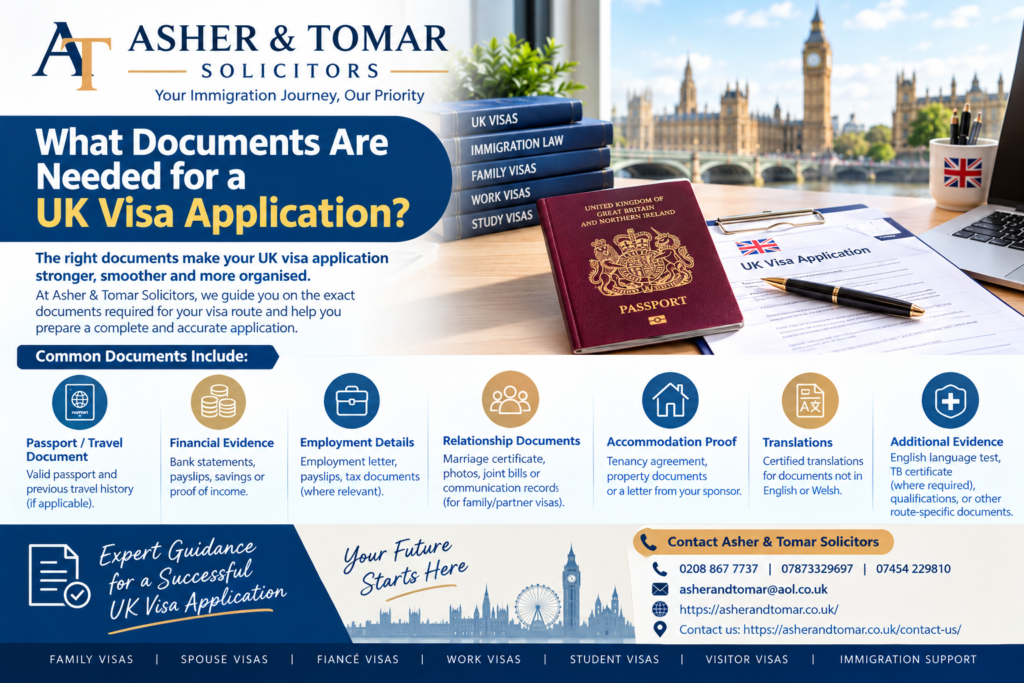
What Documents Are Needed for a UK Visa Application is one of the first questions applicants should consider before starting their immigration process. The documents required will depend on the type of visa, your personal circumstances and the immigration route you are applying under. A visitor visa, spouse visa, fiancé visa, work visa and student visa can all have different evidence requirements. Preparing documents carefully can help make your application more organised and reduce the risk of overlooking important evidence. UK Visas and Immigration may ask applicants to provide supporting documents as part of the application process, and documents that are not in English or Welsh may require certified translations. What Documents Are Needed for a UK Visa Application? What Documents Are Needed for a UK Visa Application depends mainly on the visa category and your individual circumstances. There is no single document checklist that applies to every applicant. In most cases, you should be prepared to provide evidence of your identity, your circumstances and the purpose of your application. Additional evidence may be required to demonstrate finances, employment, family relationships, accommodation, qualifications, sponsorship or other eligibility requirements. The online application process should indicate what documents you need to provide for your specific application. Passport or Valid Travel Document A valid passport or travel document is one of the most important documents for a UK visa application. Applicants will generally need to provide their current passport or another accepted travel document. Depending on the application route, you may also need information or copies relating to previous passports, visas or immigration history. For example, family visa applicants are asked for details about previous immigration applications and copies of relevant passport pages. Before submitting your application, check that the personal information on your documents is consistent with the information entered on your application form. Previous Immigration Documents If you have previously travelled to the UK or made immigration applications, you may need to provide information about your immigration history. This can include previous visas, residence documents, immigration decisions or details of earlier applications. If you have previously received a visa refusal, it is particularly important to understand the reasons for that decision and provide accurate information in any subsequent application. Failing to disclose relevant immigration history can create unnecessary complications. Financial Documents Financial evidence can be an important part of many UK visa applications. The type and amount of evidence required will depend on the specific immigration route. Depending on your circumstances, financial evidence may include bank statements, payslips, employment letters, tax documents, pension evidence, savings evidence or other acceptable proof of income. For example, UK family visa applications may require evidence showing that the relevant financial requirements are met. For partner applications, GOV.UK currently states that the usual minimum combined income requirement is £29,000 a year, although different rules can apply in certain circumstances. Applicants should not assume that the same financial documents work for every visa route. The evidence must match the requirements of the particular application. Employment and Income Evidence If your application relies on employment income, you may need documents confirming your employment and earnings. Depending on the route, this could include payslips, bank statements and an employer’s letter. For family visa applications, GOV.UK gives examples including six months of payslips, bank statements showing income and an employer letter confirming employment and salary details. Self-employed applicants or applicants relying on savings, pensions, rental income or other sources may need different evidence. Relationship Documents for Family and Spouse Visas Applicants applying for a UK spouse or partner visa may need to provide evidence of their relationship. Relevant documents can include a marriage or civil partnership certificate, evidence of living together, joint financial commitments, tenancy documents, utility bills or other evidence demonstrating the relationship. Where partners do not live together, applicants may need evidence showing that they maintain an ongoing relationship. GOV.UK gives examples such as evidence of regular communication, financial support and time spent together. The strongest evidence will depend on the individual circumstances and the specific requirements of the visa route. Documents for a UK Fiancé Visa A fiancé or fiancée visa application can require evidence demonstrating that the relationship is genuine and that the couple intends to marry or enter a civil partnership within the relevant period. Applicants may need relationship evidence, information about previous marriages or civil partnerships and financial evidence where applicable. GOV.UK states that applicants on the fiancé, fiancée or proposed civil partner route must demonstrate that they plan to marry or become civil partners within six months of arriving in the UK. Because family visa requirements can be detailed, professional advice may be useful when preparing the evidence. Accommodation Documents Depending on the visa category, applicants may need to provide information about where they will stay in the UK. This could include a tenancy agreement, property documents, accommodation details or evidence from a sponsor where relevant. The exact evidence required depends on the visa route. For visitor applications, applicants need to provide information about where they plan to stay during their visit. Travel and Visitor Visa Evidence Applicants for a Standard Visitor visa may need to provide information about their planned trip, including travel dates, accommodation and estimated trip costs. Depending on the circumstances, applicants may also need information about their employment, travel history, sponsor, family members in the UK or other relevant details. If another person is paying for the trip, evidence may be needed showing what support is being provided, how it will be provided and that the sponsor has sufficient funds. English Language Evidence Some UK immigration routes require applicants to demonstrate knowledge of the English language. The evidence required can vary depending on the visa category and the applicant’s circumstances. This may involve an approved English language test or another form of accepted evidence. Applicants should check the specific English language requirements applicable to their visa rather than assuming that one type of evidence is accepted for every route. TB Test Certificate Some applicants may need to provide
How Immigration Services Can Help With Your UK Visa Application

How Immigration Services Can Help With Your UK Visa Application is an important question for anyone planning to move to the UK, visit family, study, work, or join a partner. UK immigration applications can involve detailed eligibility requirements, supporting documents, application forms and strict procedures. Professional immigration services can help applicants understand the process, identify the appropriate visa route and prepare their application more carefully. Whether you are applying for a family visa, spouse visa, fiancé visa, visitor visa, work visa, student visa or another immigration route, getting appropriate guidance can help you approach the application with greater confidence. Immigration professionals can review your circumstances, explain the relevant requirements and help you avoid common mistakes that could create unnecessary delays or complications. How Immigration Services Can Help With Your UK Visa Application How Immigration Services Can Help With Your UK Visa Application depends on your personal circumstances and the type of visa you intend to apply for. Every immigration route has its own eligibility requirements, supporting evidence and application process. Professional assistance can help you understand what applies to your situation rather than relying on general information that may not fully match your circumstances. An immigration professional can discuss your objectives, review your circumstances and help identify the most appropriate visa category. This initial assessment can be particularly useful where more than one immigration route may appear relevant. Understanding the Correct UK Visa Route Choosing the appropriate visa category is one of the most important stages of the application process. Applying under an unsuitable route may result in complications, additional costs or a refusal. Immigration services can help explain the differences between available routes and the requirements that may apply. For example, someone planning to join their British or settled partner may need to consider a family visa route, while another applicant may require a work, study or visitor visa. Professional guidance can help you understand the purpose of each route and whether your circumstances appear to meet the relevant requirements. Checking Your Eligibility Before submitting a UK visa application, it is important to understand whether you meet the requirements for the specific immigration route. An immigration adviser or solicitor can review relevant information such as your relationship, finances, accommodation, immigration history, employment, sponsorship arrangements and other supporting circumstances where applicable. A structured eligibility review can identify potential concerns before an application is submitted. This gives applicants an opportunity to address missing evidence or obtain appropriate advice rather than discovering an issue after submission. Help With Supporting Documents Documentation is an important part of many UK visa applications. Depending on the visa category, applicants may need to provide evidence relating to identity, finances, accommodation, employment, relationships, sponsorship, qualifications or previous immigration history. Immigration services can help applicants understand which documents may be relevant to their particular application. They can also help organise supporting evidence so that the application is easier to review. Good document preparation is about more than simply providing a large number of documents. The evidence should be relevant, consistent and appropriate for the requirements of the immigration route. Assistance With Completing the Application UK visa application forms can contain detailed questions about an applicant’s personal circumstances and immigration history. Incorrect, incomplete or inconsistent information can create avoidable problems. Professional immigration services can provide guidance when completing the application and help applicants understand questions that may require additional consideration. This can be especially useful when an applicant has a complicated immigration history, previous refusal or unusual circumstances. The applicant remains responsible for providing truthful and accurate information, but professional guidance can make the preparation process more structured. Reviewing an Application Before Submission A final review can be a valuable part of the visa preparation process. Immigration professionals may check whether the application is consistent with the supporting evidence and whether important information has been overlooked. A review may also help identify inconsistencies between different documents or information entered into the application form. Correcting potential issues before submission is generally preferable to dealing with them after an application has already been submitted. Support for Family and Partner Visa Applications Family and partner visa applications can involve detailed requirements because applicants often need to demonstrate their relationship and satisfy other relevant conditions. For spouse, partner or fiancé visa applications, professional immigration services can help applicants understand the evidence that may be required and how their circumstances fit within the relevant immigration route. Where a person intends to marry in the UK and later move to another family visa route, obtaining advice about the available process can also help them plan their immigration journey more effectively. Help With Previous Visa Refusals A previous visa refusal does not necessarily mean that every future application will be unsuccessful. However, understanding why an earlier application was refused is important. Immigration professionals can review a refusal decision and explain the issues identified in the previous application. Depending on the circumstances, they may advise whether a new application, administrative review, appeal or another available option should be considered. Each case is different, so applicants should obtain advice based on their individual circumstances rather than assuming that the same solution applies to every refusal. Avoiding Common Application Mistakes Small errors can create unnecessary complications in an immigration application. Common issues can include missing documents, inconsistent information, unclear evidence, incorrect application details or misunderstanding the requirements of a particular visa category. Professional immigration services can provide a second level of review and help applicants approach the process systematically. This does not guarantee a successful outcome, as visa decisions are made according to the applicable immigration rules and the evidence provided. However, careful preparation can help applicants submit a more organised and complete application. Why Choose Professional Immigration Services? Choosing professional immigration services can be beneficial when you want clear guidance throughout the visa process. An experienced immigration professional can explain complex requirements in straightforward language, help identify relevant evidence and provide support during application preparation. Professional assistance can be particularly valuable where the case involves previous refusals,