
Documents Required for an ILR Application
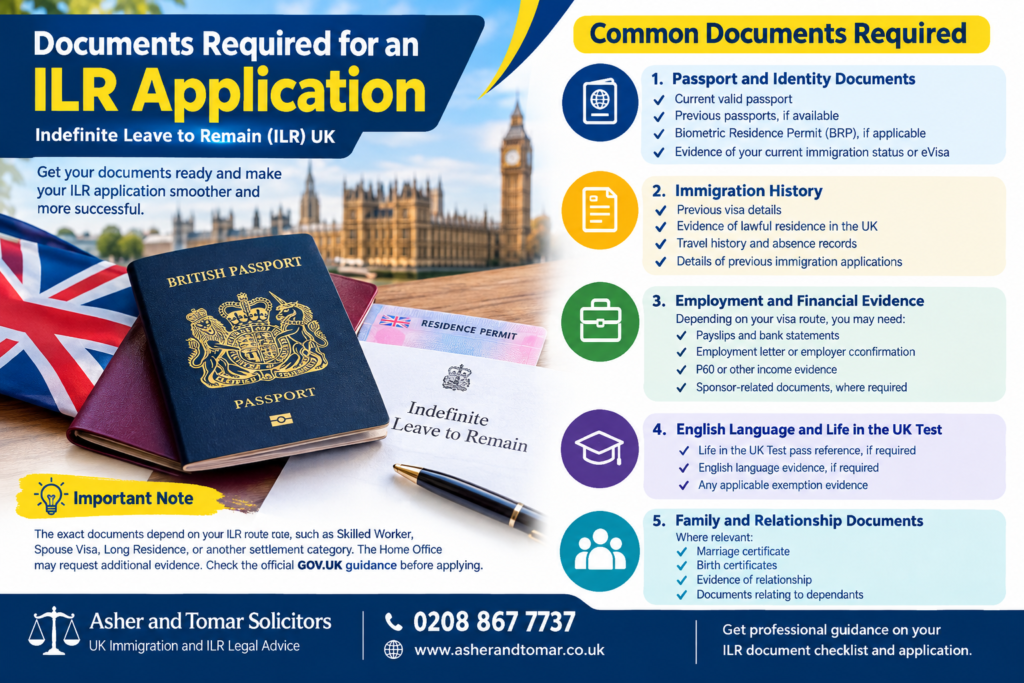
Documents Required for an ILR Application Understanding the Documents Required for an ILR Application is an important part of preparing for settlement in the UK. Indefinite Leave to Remain, commonly called ILR or settlement, allows eligible applicants to remain in the UK without a time limit. However, the documents you need can vary according to your immigration route, personal circumstances and the requirements that apply to your application. Preparing accurate evidence in advance can help make the application process more organised and reduce the risk of avoidable problems. Documents Required for an ILR Application The documents required for an ILR application are not exactly the same for every applicant. Your application may require evidence of your identity, current immigration status, residence in the UK and compliance with the conditions of your visa. Depending on your route, you may also need documents relating to employment, salary, family relationships, English language ability or the Life in the UK Test. GOV.UK confirms that applicants are told which supporting documents they need to provide as part of the application process, while route-specific requirements can determine what additional evidence is necessary. Passport and Identity Documents for ILR A valid passport or other acceptable identity document is one of the key documents required for an ILR application. It is used to establish your identity and nationality. Applicants should also keep previous passports where they contain relevant evidence of their UK immigration history or travel. For example, the long-residence route requires applicants to provide their current passport or valid travel document and all passports held during their time in the UK. If your personal circumstances have changed, such as a change of name, additional evidence may be required to explain or support the change. Evidence of Your UK Immigration Status Applicants may need to provide evidence showing their current immigration status in the UK. Depending on the circumstances, this can include online evidence of immigration status through an eVisa or other immigration documentation. The UK immigration system has increasingly moved towards digital immigration status records. Where an applicant has an eVisa, they may need to provide a share code or other online evidence when requested. GOV.UK guidance also confirms that applicants may need to provide their biometric residence permit where applicable. It is important to check that the information connected with your UKVI account is accurate before submitting your settlement application. Previous Passports and Travel History Your travel history can be particularly important when applying for ILR because continuous residence requirements may apply to your route. Previous passports can help demonstrate your travel dates and immigration history. Applicants may also need to provide evidence or explanations concerning periods spent outside the UK, depending on the settlement category. Home Office guidance explains that continuous residence calculations can involve assessing absences from the UK and, for many routes, evidence relating to those absences may be relevant. Keeping a clear record of your international travel can therefore make it easier to establish whether you meet the residence requirements. Evidence of Continuous Residence For many ILR routes, proving the required period of residence is an important part of the application. The evidence needed will depend on your route. Some applicants may need to provide information about their employment, addresses, travel history or immigration permissions to demonstrate that they have maintained the required residence. For applicants using the 10-year long-residence route, GOV.UK states that the applicant must have lived legally in the UK for 10 continuous years without gaps. Where there are complicated travel patterns, previous visa changes or gaps in immigration permission, it can be helpful to review the complete immigration history before submitting the application. Employment and Salary Documents for Work-Based ILR Applicants applying for settlement through a work route may need additional employment evidence. For example, Skilled Worker and certain related applicants may need evidence showing that they continue to meet the relevant salary requirements and that they are still required for their sponsored job. GOV.UK states that an employer may need to provide confirmation relating to the applicant’s employment and that supporting documents may be requested to demonstrate salary requirements and other settlement conditions. Depending on the circumstances, relevant employment evidence may include an employer letter, payslips, employment records and other documents requested by the application process. Life in the UK Test Evidence Many ILR applicants need to demonstrate their knowledge of life in the UK by passing the Life in the UK Test. Where the test is required, applicants may need to provide evidence confirming that they have passed it. GOV.UK guidance for relevant settlement routes refers to proof of the Life in the UK Test as part of the supporting evidence. The requirement can vary according to age, immigration route and individual circumstances, so applicants should check whether an exemption applies before making an application. English Language Evidence for ILR Some ILR routes require applicants to demonstrate sufficient knowledge of the English language. The type of evidence required depends on the immigration route and the applicant’s circumstances. For example, the long-residence route generally requires applicants aged 18 to 65 to meet the English language requirement and pass the Life in the UK Test, subject to applicable exemptions. Evidence could involve an accepted English qualification, an eligible degree or another form of evidence permitted under the relevant Immigration Rules. Documents for Family-Based ILR Applications Applicants applying for settlement through a family route may need documents relating to their relationship and family circumstances. Depending on the route, this could include evidence of a genuine and continuing relationship, proof of living arrangements, financial evidence and documents concerning children or other dependants. The exact requirements depend on whether the applicant is applying as a partner, parent, child or another qualifying family member. GOV.UK confirms that several family routes can lead to settlement, each with its own requirements. Documents for Long Residence ILR Long-residence applications can involve a detailed review of the applicant’s immigration history. Applicants may need their current passport, previous passports and evidence of their immigration status. GOV.UK
Who Is Eligible for ILR UK?

Who is eligible for ILR UK is an important question for people who have built their lives, careers and families in Britain and want to remain permanently. Indefinite Leave to Remain, commonly known as ILR or settlement, allows eligible individuals to live, work and study in the UK without a time limit. It can also provide a route towards British citizenship, subject to meeting the separate citizenship requirements. The eligibility criteria depend on your immigration route, residence history and personal circumstances. Who Is Eligible for ILR UK? People may become eligible for Indefinite Leave to Remain through several immigration routes. These can include certain work visas, family visas, long residence, UK Ancestry, British National (Overseas) visas, private life routes and certain protection-based categories. There is no single ILR rule that applies to everyone. The qualifying period and additional requirements can vary according to the visa or immigration route you hold. Therefore, checking your individual circumstances before submitting an application is essential. Who Is Eligible for ILR UK Through a Work Visa? Skilled Worker and certain other work visa holders may be able to qualify for ILR after completing the required qualifying period. For example, people on Skilled Worker, Health and Care Worker and certain Tier 2 routes generally need to have lived and worked in the UK for five years while satisfying the relevant requirements. Applicants may also need to meet applicable salary requirements and demonstrate that their employment continues to meet the settlement rules. Applicants between the relevant age range must also normally pass the Life in the UK Test. Other work-based routes have their own settlement requirements. Global Talent and Innovator Founder routes, for example, can have different qualifying periods. This means applicants should not assume that the standard five-year ILR route applies to every work visa. Who Is Eligible for ILR UK Through Family Visas? Some people may qualify for ILR because they have a qualifying family relationship with a person who is British or already settled in the UK. Eligible family routes can include certain partners, parents, children and adult dependent relatives. The requirements depend on the specific family visa and the circumstances of the applicant and their sponsoring or settled family member. For partners and parents, the qualifying period and financial or relationship requirements can be particularly important. Applicants should make sure that they have maintained the required immigration status and can provide appropriate evidence before applying. ILR Eligibility Through 10 Years of Long Residence Another important route is long residence. A person may be eligible for ILR after legally living in the UK for 10 continuous years, provided the relevant requirements are satisfied. Under the long-residence route, applicants need to have permission to stay and must demonstrate the required continuous residence. Time spent in certain immigration categories may not count towards the qualifying period. There are also specific rules concerning absences from the UK. Applicants aged within the relevant range generally need to meet the English language requirement and pass the Life in the UK Test unless an exemption applies. Because long-residence cases can involve several different visas, carefully reviewing the complete immigration history can be particularly important. Continuous Residence and ILR Eligibility Continuous residence is one of the most important factors when considering who is eligible for ILR UK. Depending on the route, applicants may need to show that they have not spent excessive periods outside the UK. For many current settlement routes, absence limits apply over a 12-month period, although the exact rules and permitted exceptions can vary. Long-residence applications also have their own continuous-residence provisions. Keeping accurate records of international travel, including departure and return dates, can therefore be useful when preparing an ILR application. Life in the UK Test and English Language Requirements Many ILR applicants need to demonstrate their knowledge of life in the UK by passing the Life in the UK Test. English language requirements may also apply depending on the immigration route. However, the exact requirements and exemptions are not identical across every route. For example, certain Skilled Worker settlement applicants do not need to prove the English requirement again because it was already demonstrated when applying for their visa. Applicants should check the requirements that apply specifically to their route rather than relying on general ILR information found online. Who Is Eligible for ILR UK on the UK Ancestry Route? People holding a UK Ancestry visa may be able to apply for ILR after five years of qualifying residence. They generally need to satisfy the relevant residence, employment and financial requirements and continue to meet the conditions of the route. Applicants aged 18 to 64 generally need to meet the English language requirement and pass the Life in the UK Test, unless an applicable exemption exists. Can British National (Overseas) Visa Holders Apply for ILR? British National (Overseas) visa holders may qualify for settlement after five years of continuous residence if they meet the relevant requirements. The rules include requirements concerning residence in the UK and permitted absences. The earliest application is generally 28 days before completing the required five-year period. ILR Eligibility Through Private Life Certain people may qualify for ILR under private life provisions. The requirements can differ depending on whether the applicant is an adult, child or young person and on their previous immigration history. For example, certain adults may qualify after 10 continuous years on a relevant private-life route, while specific provisions can apply to children and young adults who have lived in the UK for a qualifying period. What Documents Can Support an ILR Application? The documents required for ILR depend on the immigration route. Applicants may need evidence relating to their identity, current immigration status, residence, employment, salary, relationship, English language ability or Life in the UK Test, depending on their circumstances. Travel records and documents demonstrating compliance with visa conditions can also be important when assessing residence requirements. Providing accurate and relevant evidence helps UK Visas and Immigration assess whether the applicant satisfies the settlement rules. Common Reasons
How Long Before ILR on Spouse Visa? Complete 2026 Guide
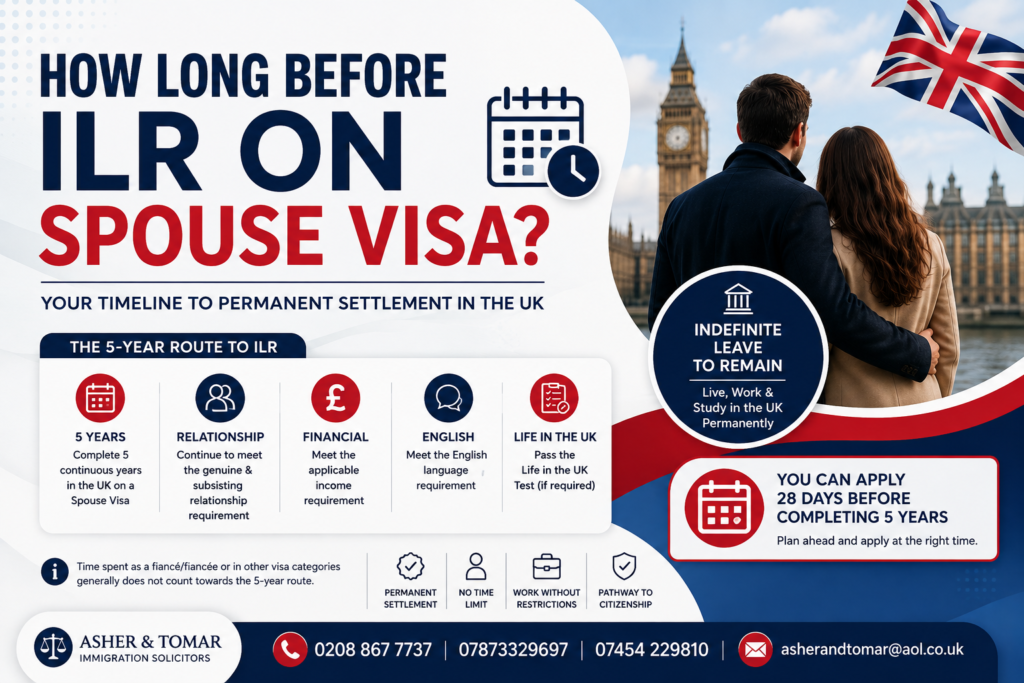
How long before ILR on Spouse Visa is one of the most important questions for people planning their long-term future in the UK. For most applicants following the five-year family route as a partner, the earliest point to apply for Indefinite Leave to Remain (ILR) is after completing 5 continuous years in the UK as a partner on a family visa. GOV.UK confirms that time spent on other visas, or as a fiancé, fiancée or proposed civil partner, generally cannot be counted towards this five-year partner route. However, completing five years does not automatically guarantee settlement. To obtain ILR after Spouse Visa, you must also satisfy the other applicable settlement requirements, which can include relationship, financial, English-language, Life in the UK Test, residence and suitability requirements. How Long Before ILR on Spouse Visa in 2026? How long before ILR on Spouse Visa generally means how long you need to remain in the UK before becoming eligible to apply for permanent settlement. For people on the standard five-year partner route, the answer is usually 5 continuous years. GOV.UK states that the earliest you can apply to settle permanently is after living in the UK for five continuous years on a family visa as a partner. The five-year period needs to be calculated carefully. If you have previously held another type of UK visa, that period may not count towards the five-year Spouse Visa settlement route. Can You Apply for ILR Before Completing Five Years? You generally cannot submit a standard five-year partner-route ILR application before you have completed the required qualifying period. GOV.UK currently states that the earliest you can apply is 28 days before you have completed the required five years. Applying earlier than this can result in an application being refused. This makes it important to calculate your qualifying date accurately rather than simply applying five years after your wedding date or the date your Spouse Visa was granted. Does Time as a Fiancé Count Towards ILR? How long before ILR on Spouse Visa can be confusing when an applicant originally entered the UK as a fiancé or fiancée. Time spent in the UK as a fiancé, fiancée or proposed civil partner generally does not count towards the five-year partner settlement period. GOV.UK specifically excludes time spent in these categories when calculating the five-year family visa partner route. For example, if you spent six months in the UK on a fiancé visa before switching to a Spouse Visa, you should not normally add those six months to the qualifying five-year period. What Date Should You Use to Calculate Your ILR Date? Your ILR after Spouse Visa qualifying date should be calculated using the immigration permission and qualifying residence rules that apply to your route. Your entry date, visa grant date and periods of permission can all be relevant. Checking your immigration documents and travel history can help you establish when you are eligible. Because applying too early can cause problems, it is sensible to calculate the date carefully before submitting the application. What Are the ILR Requirements After a Spouse Visa? Knowing how long before ILR on Spouse Visa is only the first part of the process. You must also meet the relevant settlement requirements. Depending on your circumstances and route, these can include: The Home Office assesses the complete application rather than looking at the length of residence alone. Do You Need the Life in the UK Test for ILR? The Life in the UK Test for ILR after Spouse Visa is an important requirement for many applicants. If the requirement applies to you, you will normally need to pass the test before applying for settlement. The test covers subjects relating to British history, traditions, government and everyday life. Some applicants may qualify for an exemption depending on their age or personal circumstances. Therefore, it is important to establish whether you need to take the test before submitting your ILR application. Do You Need to Meet an English Language Requirement? Yes, an English language requirement for ILR may apply unless you qualify for an exemption or satisfy the requirement through an accepted alternative. Settlement requirements can differ from the English evidence used for an earlier Spouse Visa application. Applicants should therefore check what evidence is required at the time they apply for ILR. If you previously passed an approved English test, you should check whether your existing evidence can be relied upon for your settlement application. What Is the Financial Requirement for ILR After Spouse Visa? The financial requirement for ILR after Spouse Visa can depend on when you first applied for your family visa and the rules applicable to your route. For applicants who first applied for a family visa as a partner before 11 April 2024, GOV.UK currently states that the usual combined income requirement for settlement is £18,600 per year, with additional amounts potentially applying for certain dependent children. For applicants who first applied for their family visa on or after 11 April 2024, GOV.UK currently states that the combined income requirement is £29,000 per year. This distinction is particularly important because the financial requirement for a new Spouse Visa application and the requirement for settlement can depend on the applicant’s immigration history. How Does Continuous Residence Affect ILR? Continuous residence for ILR after Spouse Visa is another important part of settlement eligibility. You should keep accurate records of your international travel during your qualifying period. The residence rules can affect whether your time in the UK counts towards settlement. Applicants who have spent substantial periods outside the UK should carefully check their travel history before applying. Do not assume that simply holding a Spouse Visa for five years automatically means you have satisfied every residence requirement. What Documents Are Needed for ILR After Spouse Visa? The documents for ILR after Spouse Visa depend on your individual circumstances. You may need documents relating to: A well-organised document file can make the application process easier and help identify missing evidence before submission. Can You Apply
What Are the New Continuous Residence Rules? A Complete Guide for UK Settlement Applicants
If you’re planning to apply for Indefinite Leave to Remain (ILR) or another UK settlement route, one of the first questions you may ask is, “What are the new continuous residence rules?” Understanding these rules is essential because the Home Office carefully assesses whether you have maintained continuous lawful residence throughout your qualifying period. The updated guidance aims to provide greater clarity on how residence is assessed, how absences are counted, and what circumstances may affect an applicant’s eligibility. Whether you hold a Skilled Worker Visa, Family Visa, Global Talent Visa, or are applying under the Long Residence route, knowing the current rules can help you prepare a stronger application. What Are the New Continuous Residence Rules? Understanding the Basics What are the new continuous residence rules? They are the Home Office requirements used to determine whether an applicant has lived lawfully and continuously in the UK for the qualifying period needed to obtain settlement. Continuous residence generally means you have: The Home Office reviews both your immigration history and your travel history when assessing your application. What Are the New Continuous Residence Rules? Who Must Meet Them? The continuous residence requirement applies to many immigration routes leading to settlement, including: What Are the New Continuous Residence Rules? Skilled Worker Applicants Most Skilled Worker visa holders become eligible to apply for ILR after completing five years of continuous lawful residence while meeting all other immigration requirements. What Are the New Continuous Residence Rules? Family Visa Applicants Applicants on spouse, civil partner, or family routes must satisfy the residence requirements throughout the qualifying period before becoming eligible for settlement. What Are the New Continuous Residence Rules? Long Residence Applicants Individuals applying after ten years of lawful residence must demonstrate continuous lawful residence across the entire qualifying period. Each route has its own eligibility criteria, making it important to review the specific immigration rules before applying. What Are the New Continuous Residence Rules? How Are Absences Counted? One of the most important parts of the updated guidance is how absences from the UK are assessed. The Home Office will normally consider: Keeping an accurate travel record throughout your qualifying period can make your application easier to prepare and verify. What Are the New Continuous Residence Rules? Lawful Residence Matters Continuous residence is not simply about remaining physically present in the UK. Applicants must also maintain lawful immigration status. This usually means: Any break in lawful residence should be carefully assessed before an application is submitted. What Are the New Continuous Residence Rules? Exceptional Circumstances The Home Office recognises that certain events may affect travel plans. Examples can include: What Are the New Continuous Residence Rules? Medical Emergencies Serious illness or emergency medical treatment may explain prolonged absences if supported by appropriate evidence. What Are the New Continuous Residence Rules? Global Travel Disruptions Travel restrictions caused by pandemics, natural disasters, or other exceptional events may be considered where properly documented. What Are the New Continuous Residence Rules? Employment Requirements Some overseas work-related travel may be acceptable depending on your visa category and the supporting evidence provided. Every application is assessed individually based on the facts and documentation submitted. What Are the New Continuous Residence Rules? Documents You Should Prepare Strong supporting evidence is essential for a successful settlement application. Useful documents include: Providing complete and organised documentation helps the Home Office verify your residence history efficiently. What Are the New Continuous Residence Rules? Common Mistakes to Avoid Many applicants unintentionally make errors that delay or affect their settlement application. These include: What Are the New Continuous Residence Rules? Incorrect Travel Records Applicants sometimes miscalculate absences or forget previous overseas trips. What Are the New Continuous Residence Rules? Missing Visa Deadlines Allowing immigration permission to expire before making a valid application can interrupt lawful residence. What Are the New Continuous Residence Rules? Incomplete Supporting Evidence Missing documents often lead to additional Home Office enquiries or delays. Seeking legal advice before submitting your application can help identify and resolve these issues early. What Are the New Continuous Residence Rules? How Can Asher & Tomar Solicitors Help? UK immigration law is detailed, and settlement applications require careful preparation. At Asher & Tomar Solicitors, we help clients by: Our experienced immigration solicitors aim to make the settlement process straightforward and fully compliant with current Home Office guidance. What Are the New Continuous Residence Rules? Final Thoughts If you’ve been asking, “What are the new continuous residence rules?”, the answer depends on your immigration route, your travel history, and whether you have maintained lawful residence throughout your qualifying period. Understanding these requirements before submitting your application can significantly reduce the risk of delays or refusal. Professional legal advice is particularly valuable if you have extensive travel outside the UK, complex immigration history, or questions about your eligibility. For expert advice on ILR applications and UK settlement, contact Asher & Tomar Solicitors on 0208 867 7737. Frequently Asked Questions What are the new continuous residence rules for UK settlement? The updated rules explain how the Home Office assesses lawful residence, qualifying periods, and absences from the UK when considering settlement applications. Do the new continuous residence rules apply to all ILR applicants? Most settlement routes include a continuous residence requirement, although the qualifying period and absence rules may vary depending on the visa category. Can business travel affect continuous residence? Frequent business travel may affect eligibility if your total absences exceed the limits applicable to your immigration route. Accurate records are important. Will the Home Office check my travel history? Yes. The Home Office may compare the travel information provided in your application with immigration and border records to verify your continuous residence. What happens if I am unsure whether I meet the continuous residence requirement? If you are uncertain, it is advisable to seek professional legal advice before submitting your application. An immigration solicitor can review your travel history and identify any potential concerns. Why choose Asher & Tomar Solicitors for ILR advice? Our experienced immigration solicitors