
How Many Penalty Points Can Lead to a Driving Ban in the UK?
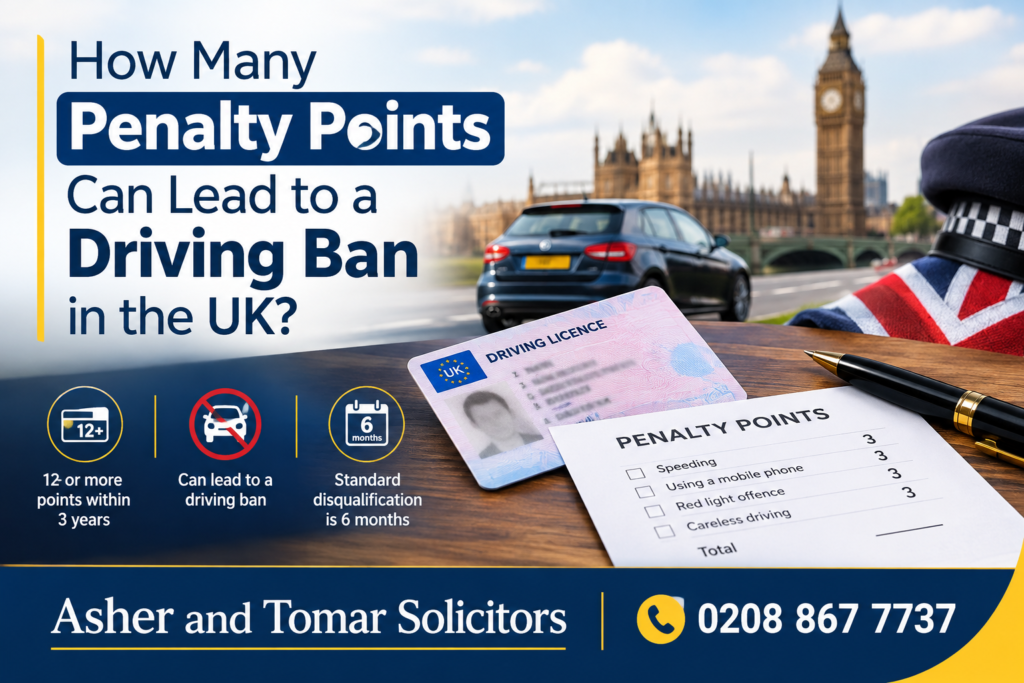
If you are asking How Many Penalty Points Can Lead to a Driving Ban in the UK?, the general rule is that you can be disqualified from driving if you accumulate 12 or more penalty points within a three-year period. This is commonly known as the “totting-up” system. However, the rules can differ for new drivers and some offences can result in disqualification independently of the number of points on your licence. Penalty points are normally added to a driving record following a conviction for an endorsable motoring offence. The number of points depends on the offence. For example, certain speeding offences can result in 3 to 6 points, while driving without insurance can result in 6 to 8 points. Understanding your current points, the dates of previous offences and the type of new allegation is important if you are concerned about losing your driving licence. How Many Penalty Points Can Lead to a Driving Ban in the UK Under the Totting-Up Rules? The general threshold is 12 or more penalty points within three years. If you reach this threshold, you can face disqualification under the totting-up procedure. GOV.UK states that a driver can be disqualified after receiving 12 or more penalty points within three years. The three-year period is important. It does not simply mean that all points ever received on your licence are counted indefinitely. The dates and validity of the relevant endorsements need to be considered when determining whether the totting-up provisions apply. If you are approaching 12 points, it is sensible to check your driving record and obtain appropriate legal advice about your individual circumstances. How Many Penalty Points Can Lead to a Driving Ban in the UK for New Drivers? New drivers have different rules. If you receive 6 or more penalty points within two years of passing your first driving test, your driving licence will be cancelled or revoked under the new-driver rules. This means a newly qualified driver does not necessarily have to reach 12 points before facing the loss of their licence. Points already held on a provisional licence can also be carried over to a full licence if they have not expired. If additional points take the total to 6 or more within the relevant two-year period, the licence can be cancelled. How Many Penalty Points Can Lead to a Driving Ban in the UK for Speeding? Speeding is one of the common ways drivers accumulate penalty points. GOV.UK states that the minimum penalty for speeding is a £100 fine and 3 penalty points, although the actual outcome can vary according to the circumstances and the seriousness of the offence. Some speeding endorsement codes can carry between 3 and 6 penalty points. For example, SP30 relates to exceeding the statutory speed limit on a public road and carries 3 to 6 points. Receiving one speeding endorsement does not automatically mean that you will be banned. However, if the points bring your relevant total to 12 or more within three years, the totting-up rules may become relevant. How Many Penalty Points Can Lead to a Driving Ban in the UK for Mobile Phone Offences? Using a handheld mobile phone or certain other devices while driving can result in penalty points. GOV.UK states that holding and using a phone, sat-nav, tablet or similar device while driving can result in 6 penalty points and a £200 fine. For a driver who already has penalty points, receiving another 6 points could have significant consequences. For a new driver within two years of passing the test, reaching 6 points can result in licence cancellation under the new-driver rules. What Is a Totting-Up Driving Ban? A totting-up driving ban can arise when a driver accumulates 12 or more penalty points within three years. The relevant points and dates are considered when determining whether the driver reaches the disqualification threshold. GOV.UK identifies TT99 as the code used to signify disqualification under the totting-up procedure. The standard disqualification period for reaching 12 or more points within three years is generally 6 months. GOV.UK also states that the period can increase for subsequent disqualifications within specified periods. A driving ban can have serious practical consequences, particularly for people who depend on their vehicle for employment, business, childcare or regular travel. Can You Lose Your Licence Without 12 Penalty Points? Yes. The 12-point threshold is not the only way someone can be disqualified from driving. Certain offences can carry a direct disqualification. GOV.UK explains that a driver can be banned after being convicted of a driving offence, as well as through the accumulation of 12 or more penalty points. Serious offences can therefore have consequences that do not depend on reaching 12 points. The precise penalty depends on the offence, the circumstances and the applicable sentencing rules. How Many Penalty Points Can Lead to a Driving Ban in the UK If You Already Have Points? If you already have penalty points, a new motoring conviction could bring your total closer to or beyond the disqualification threshold. For example, a driver with 9 relevant points who receives another 3-point endorsement could reach 12 points. Similarly, a driver with 6 points who receives another 6 points could reach the threshold. The exact calculation depends on the offences and the relevant dates. Points can remain on a driving record for different periods depending on the offence. GOV.UK states that endorsements generally remain on driving records for 4 or 11 years, although their validity for totting-up purposes is determined under the relevant rules. What Happens When You Reach 12 Penalty Points? If you reach 12 or more relevant points within three years, you may be required to attend court for the disqualification process. GOV.UK explains that drivers can receive a summons telling them when they must attend court. The court considers the applicable legal rules and determines the appropriate disqualification. A standard totting-up disqualification following 12 or more points within three years is generally six months, with longer periods potentially applying to subsequent disqualifications.
Dealing with Serious Road Offences in the UK: Expert Legal Assistance from Asher and Tomar London Solicitors
Serious road offences in the UK, such as dangerous driving and DUI, carry severe penalties, including imprisonment. Legal representation is crucial to navigate these complex cases. Asher and Tomar London Solicitors provide expert legal assistance to individuals facing serious road offence charges. Types of Serious Road Offences (Dealing with Serious Road Offences in the UK): The Legal Consequences of Serious Road Offences The Legal Process for Serious Road Offences (Dealing with Serious Road Offences in the UK) Common Challenges in Serious Road Offence Cases (Dealing with Serious Road Offences in the UK) How Asher and Tomar London Solicitors Can Help Case Study: Defending a Dangerous Driving Charge (Dealing with Serious Road Offences in the UK) Conclusion Serious road offences carry significant legal consequences, but expert legal representation can make a crucial difference. Asher and Tomar London Solicitors provide comprehensive legal services to help clients navigate serious road offence cases and achieve the best possible outcome. Contact Asher & Tomar Solicitors, who are regulated by the Solicitors Regulation Authority (SRA) and have been serving clients since 2008.