
How Does the Life in the UK Test Affect an ILR Application?
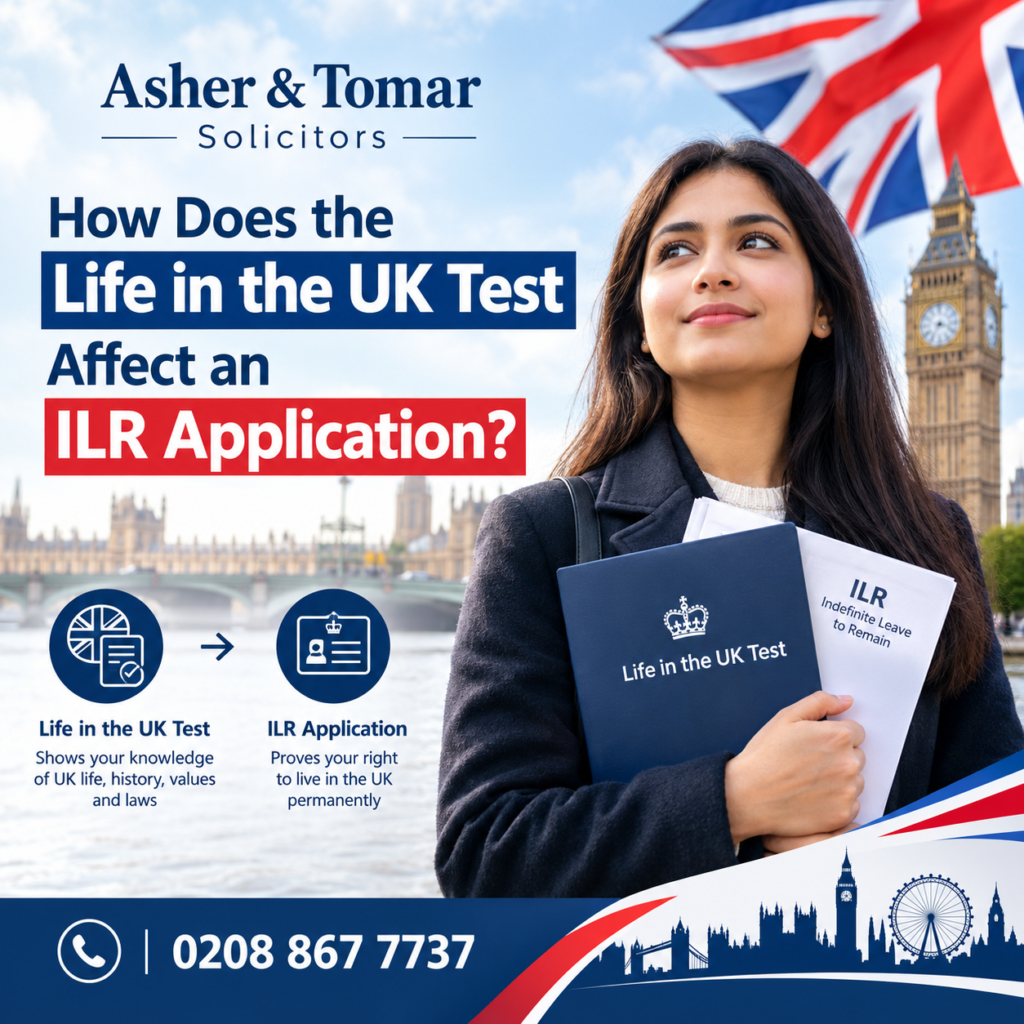
Understanding How Does the Life in the UK Test Affect an ILR Application? is important for anyone preparing to apply for Indefinite Leave to Remain in the UK. For settlement routes where the Knowledge of Life in the UK requirement applies, applicants generally need to pass the Life in the UK Test unless they qualify for an exemption. The requirement forms part of the settlement rules and is separate from other eligibility conditions such as continuous residence and, where applicable, English language ability. The test is designed to assess an applicant’s knowledge of British traditions, customs, history, government and everyday life. Understanding when and how the requirement applies can help applicants prepare their ILR application correctly. What Is the Life in the UK Test? The Life in the UK Test is a knowledge test used for certain applications for settlement and British citizenship. The official test consists of 24 questions, and applicants have 45 minutes to complete it. A score of 75% or more is required to pass. When considering How Does the Life in the UK Test Affect an ILR Application?, it is important to understand that passing the test does not by itself make someone eligible for ILR. Instead, where the requirement applies, it is one of the conditions that must be satisfied alongside the other requirements of the relevant settlement route. Is the Life in the UK Test Required for ILR? The requirement depends on the settlement route. Appendix KOL UK sets out the Knowledge of Life in the UK requirement for a range of settlement routes, including Skilled Worker, Global Talent, Innovator Founder, UK Ancestry, Private Life, Settlement Family Life and Long Residence. For applicants covered by the relevant rules, passing the Life in the UK Test is generally necessary unless an exemption or another provision applies. This means that someone preparing an ILR application should not assume that completing the required number of years in the UK is enough. The applicant should check the specific settlement route and all associated eligibility requirements. How Does the Life in the UK Test Affect an ILR Application? How Does the Life in the UK Test Affect an ILR Application? The answer is that it can form a mandatory part of the settlement eligibility requirements where the Knowledge of Life in the UK requirement applies. If an applicant is required to pass the test but has not done so and does not qualify for an exemption, the settlement application may not satisfy the relevant requirements. The test should therefore be treated as an important part of ILR preparation rather than something to consider after submitting the application. The Immigration Rules specify that an applicant demonstrates sufficient knowledge of life in the UK by passing the approved Life in the UK Test, subject to the applicable exceptions and provisions. What Score Do You Need to Pass the Life in the UK Test? You need to achieve at least 75% to pass the Life in the UK Test. There are 24 questions, so applicants need to answer at least 18 correctly. The questions are based on the official Guide for New Residents, which covers areas including British history, government, law, customs and traditions. The official government service recommends studying the approved guide when preparing for the test. What Happens After Passing the Test? After successfully passing the test, you receive a unique reference number. This number is used when completing a settlement or citizenship application, allowing the Home Office to verify that you have passed. Applicants should keep their test information safely and enter the relevant details accurately in their ILR application. Passing the test does not mean that ILR is automatically granted. The Home Office will still consider the other eligibility and suitability requirements applicable to the applicant’s settlement route. What Happens If You Fail the Life in the UK Test? Failing the test does not necessarily prevent you from applying in the future. GOV.UK states that applicants can rebook the test if they fail, although they must pay the test fee again. If the Life in the UK Test is a requirement for your ILR application, it is sensible to allow sufficient time to prepare and, if necessary, retake the test before your intended settlement application. Applicants should also check the timing of their application carefully and ensure that they meet all other settlement requirements before applying. Who May Be Exempt From the Life in the UK Test? The Immigration Rules provide certain exemptions from the knowledge of language and life requirements. For example, applicants who are under 18 or aged 65 or over are generally exempt from the relevant knowledge requirements. There are also provisions concerning certain physical or mental conditions where it would be unreasonable to expect the applicant to meet the requirement. There may also be route-specific provisions and exceptions. Therefore, an applicant should assess their personal circumstances against the Immigration Rules rather than assuming that an exemption applies. Is the Life in the UK Test the Same as the English Language Requirement? No. The Life in the UK Test and the English language requirement are separate requirements. The Life in the UK Test assesses knowledge about life in the UK. The English language requirement concerns an applicant’s ability to demonstrate English language proficiency where required under the relevant rules. For some settlement applications, both requirements may apply. Current rules also provide for changes to the English language level for certain settlement applications made from 26 March 2027, while the Life in the UK requirement remains separately governed by the relevant settlement rules. When Should You Take the Life in the UK Test? It is generally sensible to plan the test well before the intended ILR application date. This gives applicants time to study the official material and retake the test if necessary. The official government service states that the test must be booked online at least three days in advance and currently costs £50. There are more than 30 approved test centres in the
Documents Required for an ILR Application
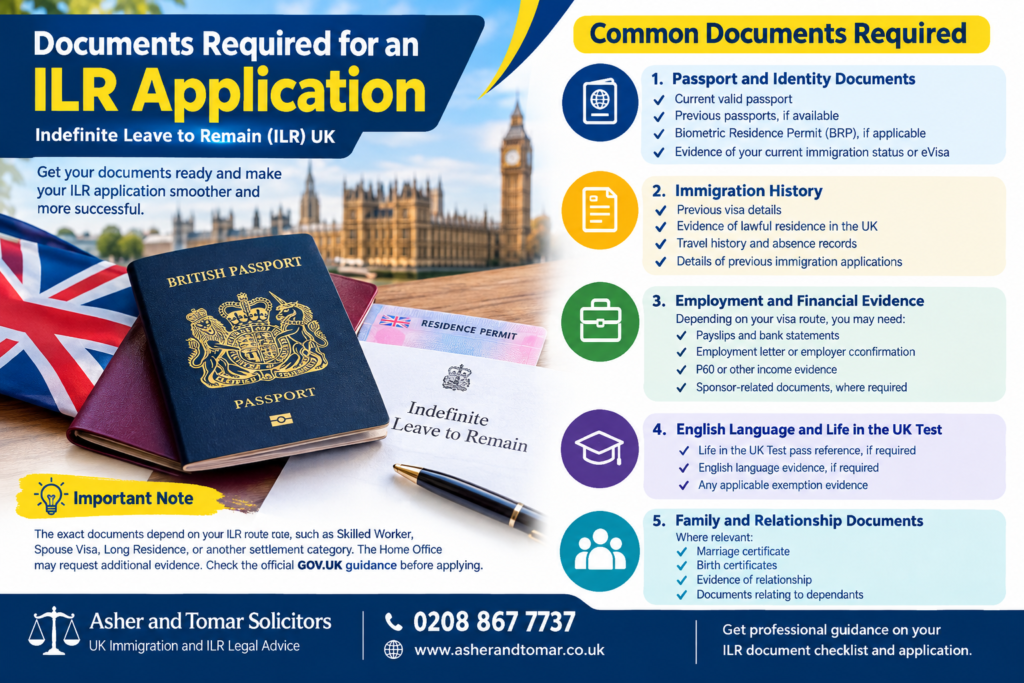
Documents Required for an ILR Application Understanding the Documents Required for an ILR Application is an important part of preparing for settlement in the UK. Indefinite Leave to Remain, commonly called ILR or settlement, allows eligible applicants to remain in the UK without a time limit. However, the documents you need can vary according to your immigration route, personal circumstances and the requirements that apply to your application. Preparing accurate evidence in advance can help make the application process more organised and reduce the risk of avoidable problems. Documents Required for an ILR Application The documents required for an ILR application are not exactly the same for every applicant. Your application may require evidence of your identity, current immigration status, residence in the UK and compliance with the conditions of your visa. Depending on your route, you may also need documents relating to employment, salary, family relationships, English language ability or the Life in the UK Test. GOV.UK confirms that applicants are told which supporting documents they need to provide as part of the application process, while route-specific requirements can determine what additional evidence is necessary. Passport and Identity Documents for ILR A valid passport or other acceptable identity document is one of the key documents required for an ILR application. It is used to establish your identity and nationality. Applicants should also keep previous passports where they contain relevant evidence of their UK immigration history or travel. For example, the long-residence route requires applicants to provide their current passport or valid travel document and all passports held during their time in the UK. If your personal circumstances have changed, such as a change of name, additional evidence may be required to explain or support the change. Evidence of Your UK Immigration Status Applicants may need to provide evidence showing their current immigration status in the UK. Depending on the circumstances, this can include online evidence of immigration status through an eVisa or other immigration documentation. The UK immigration system has increasingly moved towards digital immigration status records. Where an applicant has an eVisa, they may need to provide a share code or other online evidence when requested. GOV.UK guidance also confirms that applicants may need to provide their biometric residence permit where applicable. It is important to check that the information connected with your UKVI account is accurate before submitting your settlement application. Previous Passports and Travel History Your travel history can be particularly important when applying for ILR because continuous residence requirements may apply to your route. Previous passports can help demonstrate your travel dates and immigration history. Applicants may also need to provide evidence or explanations concerning periods spent outside the UK, depending on the settlement category. Home Office guidance explains that continuous residence calculations can involve assessing absences from the UK and, for many routes, evidence relating to those absences may be relevant. Keeping a clear record of your international travel can therefore make it easier to establish whether you meet the residence requirements. Evidence of Continuous Residence For many ILR routes, proving the required period of residence is an important part of the application. The evidence needed will depend on your route. Some applicants may need to provide information about their employment, addresses, travel history or immigration permissions to demonstrate that they have maintained the required residence. For applicants using the 10-year long-residence route, GOV.UK states that the applicant must have lived legally in the UK for 10 continuous years without gaps. Where there are complicated travel patterns, previous visa changes or gaps in immigration permission, it can be helpful to review the complete immigration history before submitting the application. Employment and Salary Documents for Work-Based ILR Applicants applying for settlement through a work route may need additional employment evidence. For example, Skilled Worker and certain related applicants may need evidence showing that they continue to meet the relevant salary requirements and that they are still required for their sponsored job. GOV.UK states that an employer may need to provide confirmation relating to the applicant’s employment and that supporting documents may be requested to demonstrate salary requirements and other settlement conditions. Depending on the circumstances, relevant employment evidence may include an employer letter, payslips, employment records and other documents requested by the application process. Life in the UK Test Evidence Many ILR applicants need to demonstrate their knowledge of life in the UK by passing the Life in the UK Test. Where the test is required, applicants may need to provide evidence confirming that they have passed it. GOV.UK guidance for relevant settlement routes refers to proof of the Life in the UK Test as part of the supporting evidence. The requirement can vary according to age, immigration route and individual circumstances, so applicants should check whether an exemption applies before making an application. English Language Evidence for ILR Some ILR routes require applicants to demonstrate sufficient knowledge of the English language. The type of evidence required depends on the immigration route and the applicant’s circumstances. For example, the long-residence route generally requires applicants aged 18 to 65 to meet the English language requirement and pass the Life in the UK Test, subject to applicable exemptions. Evidence could involve an accepted English qualification, an eligible degree or another form of evidence permitted under the relevant Immigration Rules. Documents for Family-Based ILR Applications Applicants applying for settlement through a family route may need documents relating to their relationship and family circumstances. Depending on the route, this could include evidence of a genuine and continuing relationship, proof of living arrangements, financial evidence and documents concerning children or other dependants. The exact requirements depend on whether the applicant is applying as a partner, parent, child or another qualifying family member. GOV.UK confirms that several family routes can lead to settlement, each with its own requirements. Documents for Long Residence ILR Long-residence applications can involve a detailed review of the applicant’s immigration history. Applicants may need their current passport, previous passports and evidence of their immigration status. GOV.UK
Who Is Eligible for ILR UK?

Who is eligible for ILR UK is an important question for people who have built their lives, careers and families in Britain and want to remain permanently. Indefinite Leave to Remain, commonly known as ILR or settlement, allows eligible individuals to live, work and study in the UK without a time limit. It can also provide a route towards British citizenship, subject to meeting the separate citizenship requirements. The eligibility criteria depend on your immigration route, residence history and personal circumstances. Who Is Eligible for ILR UK? People may become eligible for Indefinite Leave to Remain through several immigration routes. These can include certain work visas, family visas, long residence, UK Ancestry, British National (Overseas) visas, private life routes and certain protection-based categories. There is no single ILR rule that applies to everyone. The qualifying period and additional requirements can vary according to the visa or immigration route you hold. Therefore, checking your individual circumstances before submitting an application is essential. Who Is Eligible for ILR UK Through a Work Visa? Skilled Worker and certain other work visa holders may be able to qualify for ILR after completing the required qualifying period. For example, people on Skilled Worker, Health and Care Worker and certain Tier 2 routes generally need to have lived and worked in the UK for five years while satisfying the relevant requirements. Applicants may also need to meet applicable salary requirements and demonstrate that their employment continues to meet the settlement rules. Applicants between the relevant age range must also normally pass the Life in the UK Test. Other work-based routes have their own settlement requirements. Global Talent and Innovator Founder routes, for example, can have different qualifying periods. This means applicants should not assume that the standard five-year ILR route applies to every work visa. Who Is Eligible for ILR UK Through Family Visas? Some people may qualify for ILR because they have a qualifying family relationship with a person who is British or already settled in the UK. Eligible family routes can include certain partners, parents, children and adult dependent relatives. The requirements depend on the specific family visa and the circumstances of the applicant and their sponsoring or settled family member. For partners and parents, the qualifying period and financial or relationship requirements can be particularly important. Applicants should make sure that they have maintained the required immigration status and can provide appropriate evidence before applying. ILR Eligibility Through 10 Years of Long Residence Another important route is long residence. A person may be eligible for ILR after legally living in the UK for 10 continuous years, provided the relevant requirements are satisfied. Under the long-residence route, applicants need to have permission to stay and must demonstrate the required continuous residence. Time spent in certain immigration categories may not count towards the qualifying period. There are also specific rules concerning absences from the UK. Applicants aged within the relevant range generally need to meet the English language requirement and pass the Life in the UK Test unless an exemption applies. Because long-residence cases can involve several different visas, carefully reviewing the complete immigration history can be particularly important. Continuous Residence and ILR Eligibility Continuous residence is one of the most important factors when considering who is eligible for ILR UK. Depending on the route, applicants may need to show that they have not spent excessive periods outside the UK. For many current settlement routes, absence limits apply over a 12-month period, although the exact rules and permitted exceptions can vary. Long-residence applications also have their own continuous-residence provisions. Keeping accurate records of international travel, including departure and return dates, can therefore be useful when preparing an ILR application. Life in the UK Test and English Language Requirements Many ILR applicants need to demonstrate their knowledge of life in the UK by passing the Life in the UK Test. English language requirements may also apply depending on the immigration route. However, the exact requirements and exemptions are not identical across every route. For example, certain Skilled Worker settlement applicants do not need to prove the English requirement again because it was already demonstrated when applying for their visa. Applicants should check the requirements that apply specifically to their route rather than relying on general ILR information found online. Who Is Eligible for ILR UK on the UK Ancestry Route? People holding a UK Ancestry visa may be able to apply for ILR after five years of qualifying residence. They generally need to satisfy the relevant residence, employment and financial requirements and continue to meet the conditions of the route. Applicants aged 18 to 64 generally need to meet the English language requirement and pass the Life in the UK Test, unless an applicable exemption exists. Can British National (Overseas) Visa Holders Apply for ILR? British National (Overseas) visa holders may qualify for settlement after five years of continuous residence if they meet the relevant requirements. The rules include requirements concerning residence in the UK and permitted absences. The earliest application is generally 28 days before completing the required five-year period. ILR Eligibility Through Private Life Certain people may qualify for ILR under private life provisions. The requirements can differ depending on whether the applicant is an adult, child or young person and on their previous immigration history. For example, certain adults may qualify after 10 continuous years on a relevant private-life route, while specific provisions can apply to children and young adults who have lived in the UK for a qualifying period. What Documents Can Support an ILR Application? The documents required for ILR depend on the immigration route. Applicants may need evidence relating to their identity, current immigration status, residence, employment, salary, relationship, English language ability or Life in the UK Test, depending on their circumstances. Travel records and documents demonstrating compliance with visa conditions can also be important when assessing residence requirements. Providing accurate and relevant evidence helps UK Visas and Immigration assess whether the applicant satisfies the settlement rules. Common Reasons
How to Check ILR Eligibility UK
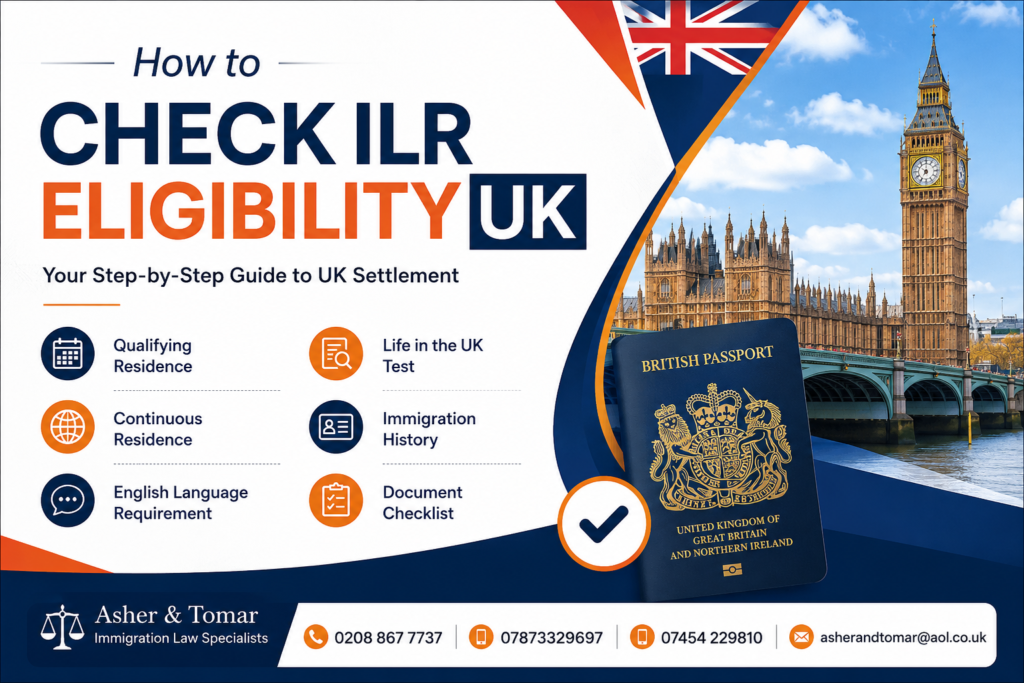
How to Check ILR Eligibility UK is an important question for anyone who has built their life, career or family in the country and is now considering permanent settlement. Indefinite Leave to Remain (ILR), also known as settlement, can allow an eligible person to live, work and study in the UK without a time limit. However, ILR eligibility is not determined by simply counting the number of years you have lived in Britain. Your immigration route, qualifying residence, absences from the UK, immigration history and other requirements can all affect whether you qualify. This guide explains how to check ILR eligibility UK and the key areas you should review before submitting an application. How to Check ILR Eligibility UK Based on Your Visa Route How to Check ILR Eligibility UK should begin with identifying the immigration route on which you are applying. There is no single qualifying period that applies to every applicant. Many work-based routes have a five-year settlement period. For example, eligible Skilled Worker and certain related applicants generally need five years of qualifying residence before applying for ILR. Other routes can have different settlement periods. Depending on your circumstances, you may be considering ILR through: Your previous immigration permission may also be relevant because some routes allow qualifying time from more than one eligible category to be combined. How to Check ILR Eligibility UK If You Have Changed Visas How to Check ILR Eligibility UK after changing immigration categories requires careful examination of your previous visas. Some settlement routes allow qualifying periods under specified routes to be combined, while other categories have separate rules. For example, GOV.UK states that certain applicants under the Skilled Worker route can count qualifying time under a combination of specified work-related routes. This means you should not automatically assume that changing your visa has restarted your ILR clock. How to Check ILR Eligibility UK by Calculating Your Qualifying Residence How to Check ILR Eligibility UK also means establishing exactly when your qualifying residence began and when you become eligible to apply. For many settlement routes, the qualifying period is five years, although the period varies according to the immigration route. The long residence route is different and generally requires ten years of continuous lawful residence. Keep records of: A clear immigration timeline can make it easier to identify your earliest potential ILR application date. How to Check ILR Eligibility UK and Continuous Residence How to Check ILR Eligibility UK cannot be completed accurately without checking your absences from Britain. For routes covered by the current Continuous Residence rules, applicants generally must not have been outside the UK for more than 180 days in any 12-month period, subject to the specific rules and exceptions applicable to their route and circumstances. You should therefore create an absence record showing: Date of departure → Date of return → Country visited → Reason for travel Do not rely solely on memory. Passport stamps, travel bookings, emails, employer records and other documents can help you establish an accurate travel history. How to Check ILR Eligibility UK When You Have Long Absences How to Check ILR Eligibility UK becomes particularly important if you have spent substantial periods overseas for employment, family emergencies, holidays or other reasons. Certain permitted exceptions can affect how absences are treated, so exceeding a standard absence limit does not necessarily mean every case should be assessed in the same way. Long residence has its own historical and transitional rules concerning absences. Current GOV.UK guidance explains that special rules apply to certain periods of absence that started before 11 April 2024. How to Check ILR Eligibility UK Through Long Residence How to Check ILR Eligibility UK through long residence involves a different assessment from many five-year settlement routes. Under Appendix Long Residence, an applicant generally needs 10 years of lawful continuous residence in the UK. Time on several immigration categories can potentially contribute to the qualifying period, subject to the Immigration Rules. Some periods cannot normally be counted, including certain time spent as a visitor, on a Short-term Student route or Seasonal Worker route, as well as certain periods of overstaying and immigration bail. If you have lived in the UK under several different visas for a long period, professional assessment can be particularly useful because the calculation may involve your complete immigration history. How to Check ILR Eligibility UK for the English Language Requirement How to Check ILR Eligibility UK should include checking whether you need to satisfy the English language requirement. The requirement can depend on your settlement route, age and whether an exemption applies. Where the requirement applies, applicants need to demonstrate the required level of English in accordance with the relevant Immigration Rules. There is also an important upcoming change. Under the current Appendix Long Residence rules, applicants applying before 26 March 2027 generally need English at B1 speaking and listening level unless exempt, while applications made on or after that date generally require B2 unless an exemption applies. Because immigration requirements can change, applicants should check the rules applicable on the date they intend to apply. How to Check ILR Eligibility UK Through the Life in the UK Test How to Check ILR Eligibility UK also involves checking whether you need to pass the Life in the UK Test. For routes where the Knowledge of Life in the UK requirement applies, applicants generally need to satisfy this requirement unless an exemption applies. The exact requirements can vary according to the settlement route. If you have already passed the test for an earlier immigration application, check whether your previous result can satisfy the requirement for your ILR application rather than assuming that you need to take it again. How to Check ILR Eligibility UK by Reviewing Your Immigration History How to Check ILR Eligibility UK should always include an examination of your immigration history. Look for potential issues such as: Your immigration history may affect the suitability requirements for settlement. Therefore, an applicant with a complicated history should consider obtaining
How Long Before ILR on Spouse Visa? Complete 2026 Guide

How long before ILR on Spouse Visa is one of the most important questions for people planning their long-term future in the UK. For most applicants following the five-year family route as a partner, the earliest point to apply for Indefinite Leave to Remain (ILR) is after completing 5 continuous years in the UK as a partner on a family visa. GOV.UK confirms that time spent on other visas, or as a fiancé, fiancée or proposed civil partner, generally cannot be counted towards this five-year partner route. However, completing five years does not automatically guarantee settlement. To obtain ILR after Spouse Visa, you must also satisfy the other applicable settlement requirements, which can include relationship, financial, English-language, Life in the UK Test, residence and suitability requirements. How Long Before ILR on Spouse Visa in 2026? How long before ILR on Spouse Visa generally means how long you need to remain in the UK before becoming eligible to apply for permanent settlement. For people on the standard five-year partner route, the answer is usually 5 continuous years. GOV.UK states that the earliest you can apply to settle permanently is after living in the UK for five continuous years on a family visa as a partner. The five-year period needs to be calculated carefully. If you have previously held another type of UK visa, that period may not count towards the five-year Spouse Visa settlement route. Can You Apply for ILR Before Completing Five Years? You generally cannot submit a standard five-year partner-route ILR application before you have completed the required qualifying period. GOV.UK currently states that the earliest you can apply is 28 days before you have completed the required five years. Applying earlier than this can result in an application being refused. This makes it important to calculate your qualifying date accurately rather than simply applying five years after your wedding date or the date your Spouse Visa was granted. Does Time as a Fiancé Count Towards ILR? How long before ILR on Spouse Visa can be confusing when an applicant originally entered the UK as a fiancé or fiancée. Time spent in the UK as a fiancé, fiancée or proposed civil partner generally does not count towards the five-year partner settlement period. GOV.UK specifically excludes time spent in these categories when calculating the five-year family visa partner route. For example, if you spent six months in the UK on a fiancé visa before switching to a Spouse Visa, you should not normally add those six months to the qualifying five-year period. What Date Should You Use to Calculate Your ILR Date? Your ILR after Spouse Visa qualifying date should be calculated using the immigration permission and qualifying residence rules that apply to your route. Your entry date, visa grant date and periods of permission can all be relevant. Checking your immigration documents and travel history can help you establish when you are eligible. Because applying too early can cause problems, it is sensible to calculate the date carefully before submitting the application. What Are the ILR Requirements After a Spouse Visa? Knowing how long before ILR on Spouse Visa is only the first part of the process. You must also meet the relevant settlement requirements. Depending on your circumstances and route, these can include: The Home Office assesses the complete application rather than looking at the length of residence alone. Do You Need the Life in the UK Test for ILR? The Life in the UK Test for ILR after Spouse Visa is an important requirement for many applicants. If the requirement applies to you, you will normally need to pass the test before applying for settlement. The test covers subjects relating to British history, traditions, government and everyday life. Some applicants may qualify for an exemption depending on their age or personal circumstances. Therefore, it is important to establish whether you need to take the test before submitting your ILR application. Do You Need to Meet an English Language Requirement? Yes, an English language requirement for ILR may apply unless you qualify for an exemption or satisfy the requirement through an accepted alternative. Settlement requirements can differ from the English evidence used for an earlier Spouse Visa application. Applicants should therefore check what evidence is required at the time they apply for ILR. If you previously passed an approved English test, you should check whether your existing evidence can be relied upon for your settlement application. What Is the Financial Requirement for ILR After Spouse Visa? The financial requirement for ILR after Spouse Visa can depend on when you first applied for your family visa and the rules applicable to your route. For applicants who first applied for a family visa as a partner before 11 April 2024, GOV.UK currently states that the usual combined income requirement for settlement is £18,600 per year, with additional amounts potentially applying for certain dependent children. For applicants who first applied for their family visa on or after 11 April 2024, GOV.UK currently states that the combined income requirement is £29,000 per year. This distinction is particularly important because the financial requirement for a new Spouse Visa application and the requirement for settlement can depend on the applicant’s immigration history. How Does Continuous Residence Affect ILR? Continuous residence for ILR after Spouse Visa is another important part of settlement eligibility. You should keep accurate records of your international travel during your qualifying period. The residence rules can affect whether your time in the UK counts towards settlement. Applicants who have spent substantial periods outside the UK should carefully check their travel history before applying. Do not assume that simply holding a Spouse Visa for five years automatically means you have satisfied every residence requirement. What Documents Are Needed for ILR After Spouse Visa? The documents for ILR after Spouse Visa depend on your individual circumstances. You may need documents relating to: A well-organised document file can make the application process easier and help identify missing evidence before submission. Can You Apply
ILR After Spouse Visa: Requirements, Eligibility & Application Guide
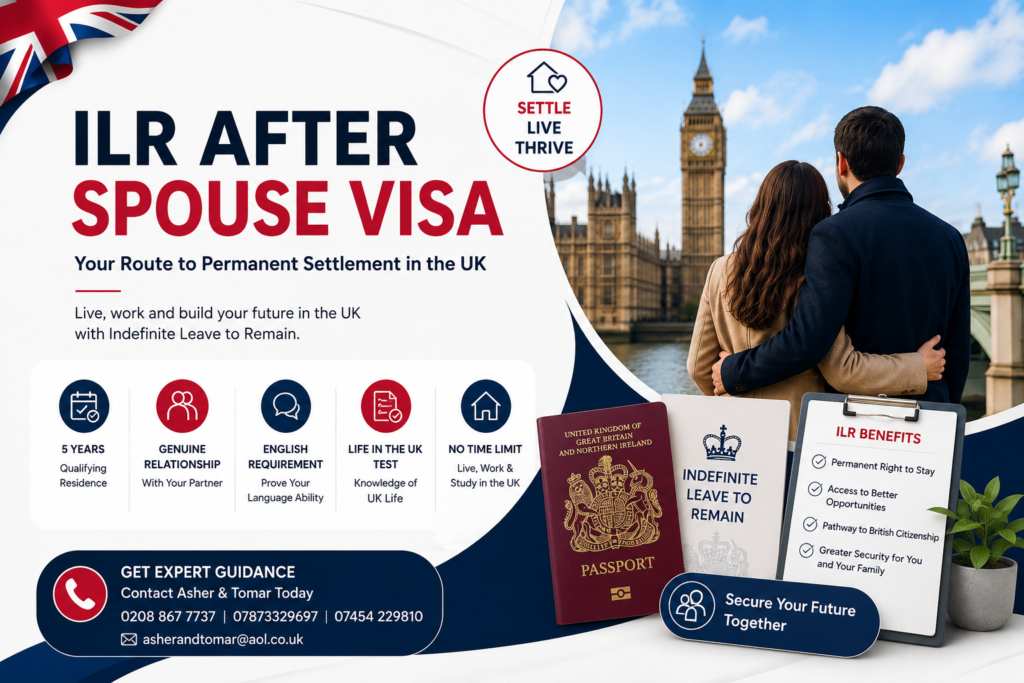
ILR after Spouse Visa is an important milestone for people who have lived in the UK with their British or settled partner and are looking to secure permanent immigration status. Indefinite Leave to Remain (ILR) allows eligible applicants to live and work in the UK without a time limit and can be an important step towards British citizenship. For many people on the five-year family route, ILR after Spouse Visa may become available after completing the required qualifying period, provided they meet the relevant immigration, financial, relationship, residence and English-language requirements. The rules surrounding settlement can be detailed, particularly where an applicant has changed immigration categories, spent significant time outside the UK or has had previous visa issues. Understanding the requirements before applying can help you prepare the correct evidence. What Is ILR After Spouse Visa? ILR after Spouse Visa refers to applying for Indefinite Leave to Remain after completing the required period on the UK family visa route as a partner. Unlike a temporary Spouse Visa, ILR generally provides permission to remain in the UK without a time limit. It can also remove some of the restrictions associated with temporary immigration permission. However, receiving a Spouse Visa does not automatically lead to ILR. You must satisfy the settlement requirements that apply to your circumstances when you make your application. How Long Does It Take to Get ILR After Spouse Visa? For applicants following the standard five-year partner route, ILR after Spouse Visa is generally considered after five continuous years of qualifying residence as a partner. The qualifying period must be assessed carefully. Time spent in other immigration categories may not necessarily count towards the five-year partner route. Applicants should also consider the continuous residence requirements, permitted absences and the immigration status they held during the qualifying period. What Are the ILR After Spouse Visa Requirements? The ILR after Spouse Visa requirements can include several areas of eligibility. Applicants normally need to demonstrate that they continue to meet the requirements of the partner route and satisfy the settlement rules. Key areas can include: The exact requirements can depend on the date and route under which you first entered the family visa category. Does the Relationship Need to Continue for ILR? Yes, relationship requirements are an important part of ILR after Spouse Visa applications made under the partner route. You will generally need to demonstrate that your relationship with your spouse or partner continues to meet the requirements of the relevant immigration route. Evidence can include documents demonstrating your shared life and circumstances. The appropriate evidence will depend on your situation. If your relationship has broken down, you should obtain specific immigration advice before making an ILR application because different immigration considerations may apply. Is There an English Requirement for ILR After Spouse Visa? The English requirement for ILR after Spouse Visa is different from simply meeting the English requirement for your original Spouse Visa. Applicants seeking settlement may need to demonstrate the required level of English unless they qualify for an exemption or meet the requirement in another permitted way. The evidence accepted can depend on your circumstances, including your nationality, qualifications and previous immigration applications. Before applying, check that your English evidence satisfies the settlement rules applicable to you. Do You Need to Pass the Life in the UK Test? The Life in the UK Test for ILR after Spouse Visa is an important requirement for many settlement applicants. The test assesses knowledge of British traditions, history, government and everyday life. Applicants who are required to take the test should make sure they pass it before submitting their settlement application. Certain applicants may qualify for an exemption, so it is important to establish whether the requirement applies to you. Does the Financial Requirement Apply to ILR After Spouse Visa? The ILR after Spouse Visa financial requirement needs careful consideration because settlement requirements are not necessarily identical to the requirements for extending a temporary Spouse Visa. Applicants should review the financial requirements applicable to their settlement route and provide the correct supporting evidence. Depending on your circumstances, documents may include evidence relating to employment, income, self-employment or other relevant financial information. Do not assume that the documents used for your previous Spouse Visa application will automatically be sufficient for ILR. What Documents Are Needed for ILR After Spouse Visa? The documents for ILR after Spouse Visa will depend on your individual circumstances, but applicants should expect to provide evidence supporting their identity, residence, relationship and eligibility. Potential documents can include: The Home Office can request additional information if necessary. What Is Continuous Residence for ILR After Spouse Visa? Continuous residence for ILR after Spouse Visa means meeting the residence requirements during the relevant qualifying period. Applicants should carefully review their travel history and calculate time spent outside the UK. Even where travel was for holidays, family reasons or work, the dates should be recorded accurately. Keeping a clear record of international travel throughout your Spouse Visa period can make the ILR preparation process much easier. If you have spent extended periods outside the UK, professional advice may be useful before submitting an application. Can You Apply for ILR Before Your Spouse Visa Expires? You can generally apply for settlement once you become eligible under the applicable rules. However, timing is important. Applying too early can create eligibility problems, while leaving your application until the last moment can create unnecessary pressure. Before submitting an ILR after Spouse Visa application, check your qualifying date, immigration history and current visa expiry date carefully. What Happens After You Get ILR? Once your ILR after Spouse Visa application is approved, you will generally have settlement in the UK rather than temporary permission. ILR can provide greater long-term security and may also be relevant to a future application for British citizenship, provided you meet the separate nationality requirements. It is important to remember that ILR and British citizenship are not the same thing. Citizenship involves its own eligibility criteria and application process. Why Get Professional
What Are the New Continuous Residence Rules? A Complete Guide for UK Settlement Applicants

If you’re planning to apply for Indefinite Leave to Remain (ILR) or another UK settlement route, one of the first questions you may ask is, “What are the new continuous residence rules?” Understanding these rules is essential because the Home Office carefully assesses whether you have maintained continuous lawful residence throughout your qualifying period. The updated guidance aims to provide greater clarity on how residence is assessed, how absences are counted, and what circumstances may affect an applicant’s eligibility. Whether you hold a Skilled Worker Visa, Family Visa, Global Talent Visa, or are applying under the Long Residence route, knowing the current rules can help you prepare a stronger application. What Are the New Continuous Residence Rules? Understanding the Basics What are the new continuous residence rules? They are the Home Office requirements used to determine whether an applicant has lived lawfully and continuously in the UK for the qualifying period needed to obtain settlement. Continuous residence generally means you have: The Home Office reviews both your immigration history and your travel history when assessing your application. What Are the New Continuous Residence Rules? Who Must Meet Them? The continuous residence requirement applies to many immigration routes leading to settlement, including: What Are the New Continuous Residence Rules? Skilled Worker Applicants Most Skilled Worker visa holders become eligible to apply for ILR after completing five years of continuous lawful residence while meeting all other immigration requirements. What Are the New Continuous Residence Rules? Family Visa Applicants Applicants on spouse, civil partner, or family routes must satisfy the residence requirements throughout the qualifying period before becoming eligible for settlement. What Are the New Continuous Residence Rules? Long Residence Applicants Individuals applying after ten years of lawful residence must demonstrate continuous lawful residence across the entire qualifying period. Each route has its own eligibility criteria, making it important to review the specific immigration rules before applying. What Are the New Continuous Residence Rules? How Are Absences Counted? One of the most important parts of the updated guidance is how absences from the UK are assessed. The Home Office will normally consider: Keeping an accurate travel record throughout your qualifying period can make your application easier to prepare and verify. What Are the New Continuous Residence Rules? Lawful Residence Matters Continuous residence is not simply about remaining physically present in the UK. Applicants must also maintain lawful immigration status. This usually means: Any break in lawful residence should be carefully assessed before an application is submitted. What Are the New Continuous Residence Rules? Exceptional Circumstances The Home Office recognises that certain events may affect travel plans. Examples can include: What Are the New Continuous Residence Rules? Medical Emergencies Serious illness or emergency medical treatment may explain prolonged absences if supported by appropriate evidence. What Are the New Continuous Residence Rules? Global Travel Disruptions Travel restrictions caused by pandemics, natural disasters, or other exceptional events may be considered where properly documented. What Are the New Continuous Residence Rules? Employment Requirements Some overseas work-related travel may be acceptable depending on your visa category and the supporting evidence provided. Every application is assessed individually based on the facts and documentation submitted. What Are the New Continuous Residence Rules? Documents You Should Prepare Strong supporting evidence is essential for a successful settlement application. Useful documents include: Providing complete and organised documentation helps the Home Office verify your residence history efficiently. What Are the New Continuous Residence Rules? Common Mistakes to Avoid Many applicants unintentionally make errors that delay or affect their settlement application. These include: What Are the New Continuous Residence Rules? Incorrect Travel Records Applicants sometimes miscalculate absences or forget previous overseas trips. What Are the New Continuous Residence Rules? Missing Visa Deadlines Allowing immigration permission to expire before making a valid application can interrupt lawful residence. What Are the New Continuous Residence Rules? Incomplete Supporting Evidence Missing documents often lead to additional Home Office enquiries or delays. Seeking legal advice before submitting your application can help identify and resolve these issues early. What Are the New Continuous Residence Rules? How Can Asher & Tomar Solicitors Help? UK immigration law is detailed, and settlement applications require careful preparation. At Asher & Tomar Solicitors, we help clients by: Our experienced immigration solicitors aim to make the settlement process straightforward and fully compliant with current Home Office guidance. What Are the New Continuous Residence Rules? Final Thoughts If you’ve been asking, “What are the new continuous residence rules?”, the answer depends on your immigration route, your travel history, and whether you have maintained lawful residence throughout your qualifying period. Understanding these requirements before submitting your application can significantly reduce the risk of delays or refusal. Professional legal advice is particularly valuable if you have extensive travel outside the UK, complex immigration history, or questions about your eligibility. For expert advice on ILR applications and UK settlement, contact Asher & Tomar Solicitors on 0208 867 7737. Frequently Asked Questions What are the new continuous residence rules for UK settlement? The updated rules explain how the Home Office assesses lawful residence, qualifying periods, and absences from the UK when considering settlement applications. Do the new continuous residence rules apply to all ILR applicants? Most settlement routes include a continuous residence requirement, although the qualifying period and absence rules may vary depending on the visa category. Can business travel affect continuous residence? Frequent business travel may affect eligibility if your total absences exceed the limits applicable to your immigration route. Accurate records are important. Will the Home Office check my travel history? Yes. The Home Office may compare the travel information provided in your application with immigration and border records to verify your continuous residence. What happens if I am unsure whether I meet the continuous residence requirement? If you are uncertain, it is advisable to seek professional legal advice before submitting your application. An immigration solicitor can review your travel history and identify any potential concerns. Why choose Asher & Tomar Solicitors for ILR advice? Our experienced immigration solicitors
ILR Eligibility Continuous Residence: Complete Guide to Meeting UK Settlement Requirements
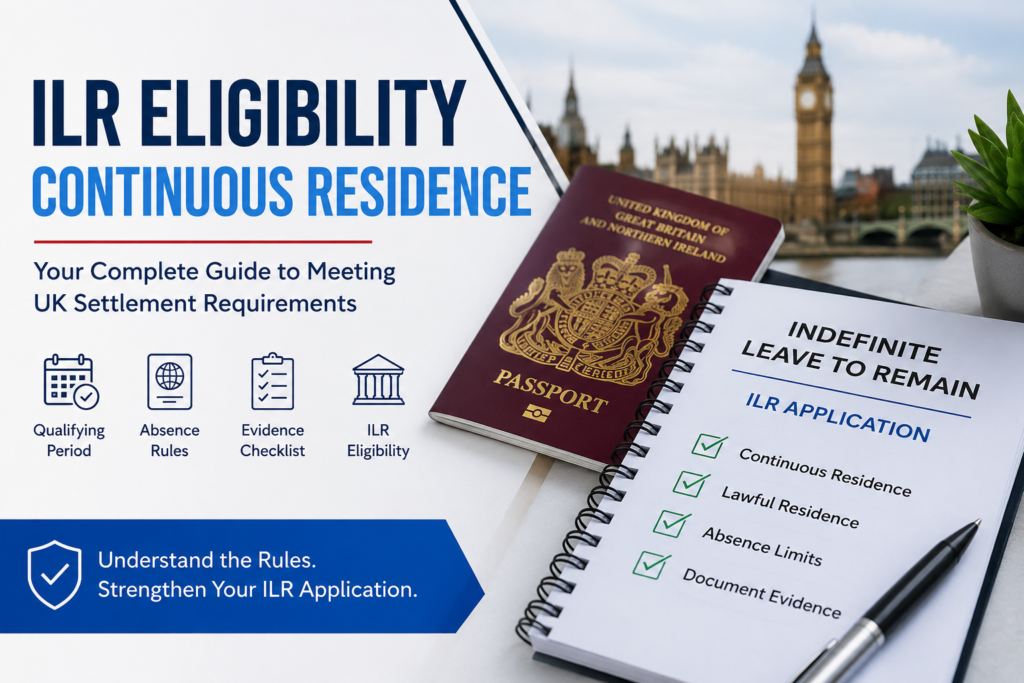
Obtaining Indefinite Leave to Remain (ILR) is one of the most significant milestones for anyone wishing to settle permanently in the UK. However, before submitting your application, you must satisfy the ILR Eligibility Continuous Residence requirement. This is one of the most carefully assessed parts of every settlement application and determines whether your period of residence in the UK meets the Home Office criteria. Whether you are applying through the Skilled Worker route, Family Visa, Long Residence, or another qualifying immigration category, understanding the continuous residence rules is essential. Even small mistakes in calculating absences or gaps in lawful residence could affect your application. This guide explains everything you need to know about ILR Eligibility Continuous Residence, including qualifying periods, absence rules, common mistakes, and how professional immigration solicitors can support your application. ILR Eligibility Continuous Residence Explained ILR Eligibility Continuous Residence refers to the requirement that an applicant must have lived lawfully in the UK for the qualifying period without breaking their continuous residence. The Home Office checks your entire immigration history to ensure you have: Continuous residence is one of the most important factors considered before ILR is granted. ILR Eligibility Continuous Residence Under Different Visa Routes The qualifying period depends on the immigration route under which you apply. ILR Eligibility Continuous Residence for Skilled Worker Visa Most Skilled Worker visa holders become eligible for ILR after completing five years of continuous lawful residence in the UK while meeting salary, employment, and residence requirements. ILR Eligibility Continuous Residence for Family Visa Applicants under spouse, civil partner, or family routes usually become eligible after completing the required settlement period while maintaining continuous lawful residence. ILR Eligibility Continuous Residence for Long Residence Applicants who have completed ten years of lawful residence in the UK may qualify under the Long Residence route, provided continuous residence has not been broken. Every immigration category has its own rules, making professional legal advice highly beneficial. ILR Eligibility Continuous Residence and UK Absence Rules One of the most common reasons for ILR refusal is exceeding the permitted number of days outside the UK. When reviewing your application, the Home Office considers: Maintaining accurate travel records throughout your qualifying period can significantly strengthen your application. ILR Eligibility Continuous Residence and Lawful Residence Continuous residence is not simply about living in the UK. Applicants must also demonstrate continuous lawful residence throughout the qualifying period. This generally means: Any interruption in your immigration status should be reviewed carefully before submitting your ILR application. ILR Eligibility Continuous Residence and Supporting Evidence The Home Office requires evidence demonstrating that your residence has been continuous. Documents may include: Providing organised documentation can reduce delays and improve the overall quality of your application. ILR Eligibility Continuous Residence and Exceptional Circumstances Certain situations may allow absences to be considered differently by the Home Office. Examples include: ILR Eligibility Continuous Residence Due to Medical Emergencies Serious illness or medical treatment may explain extended periods outside the UK if supported by appropriate medical evidence. ILR Eligibility Continuous Residence Due to Employment Certain overseas business assignments may be accepted depending on your immigration category and supporting documents. ILR Eligibility Continuous Residence Due to Global Events Travel restrictions caused by pandemics, natural disasters, or political instability may also be considered in appropriate cases. Each situation is assessed individually based on the available evidence. ILR Eligibility Continuous Residence Common Mistakes Applicants frequently encounter problems because they misunderstand the residence rules. Common mistakes include: ILR Eligibility Continuous Residence and Incorrect Absence Calculations Many applicants underestimate the number of days spent outside the UK. ILR Eligibility Continuous Residence and Visa Gaps Allowing a visa to expire before applying for an extension may affect lawful residence. ILR Eligibility Continuous Residence and Missing Documents Incomplete travel records or insufficient evidence can delay processing or result in refusal. ILR Eligibility Continuous Residence and Late Legal Advice Seeking professional advice only after submitting an application often makes it more difficult to resolve potential issues. ILR Eligibility Continuous Residence and How Asher & Tomar Solicitors Can Help Applying for ILR requires careful preparation and a thorough understanding of UK immigration law. Our experienced immigration solicitors assist clients by: Our personalised legal advice helps ensure your application is complete, accurate, and fully compliant with Home Office requirements. ILR Eligibility Continuous Residence Benefits of Professional Legal Advice Professional immigration advice can help you: Receiving expert guidance before applying can significantly reduce the risk of delays or refusals. ILR Eligibility Continuous Residence: Contact Asher & Tomar Solicitors If you are planning to apply for Indefinite Leave to Remain, understanding the ILR Eligibility Continuous Residence requirement is essential. Every immigration history is different, and obtaining tailored legal advice can make the application process much smoother. At Asher & Tomar Solicitors, our experienced UK immigration lawyers provide expert support for Skilled Worker ILR, Family Visa ILR, Long Residence applications, and other settlement routes. Call 0208 867 7737, 07873329697, 07454 229810 today to arrange a consultation and receive professional advice on your ILR application. Frequently Asked Questions ILR Eligibility Continuous Residence: Does changing employers affect my ILR application? Changing employers does not automatically affect your ILR Eligibility Continuous Residence, provided you continue to meet your visa conditions, maintain lawful immigration status, and obtain any required Home Office approvals before changing employment. ILR Eligibility Continuous Residence: Can remote work outside the UK impact eligibility? Working remotely from outside the UK for an extended period may affect your ILR Eligibility Continuous Residence if it increases your absences beyond the permitted limits. It is important to keep accurate travel records and seek legal advice if your work requires frequent international travel. ILR Eligibility Continuous Residence: How does the Home Office verify my travel history? The Home Office may review passport stamps, visa records, border entry and exit information, and the travel history you provide in your application. Any inconsistencies should be explained with supporting evidence. ILR Eligibility Continuous Residence: Can maternity, paternity, or parental leave affect my eligibility? No. Approved maternity, paternity, adoption,
What is ILR (Indefinite Leave to Remain)
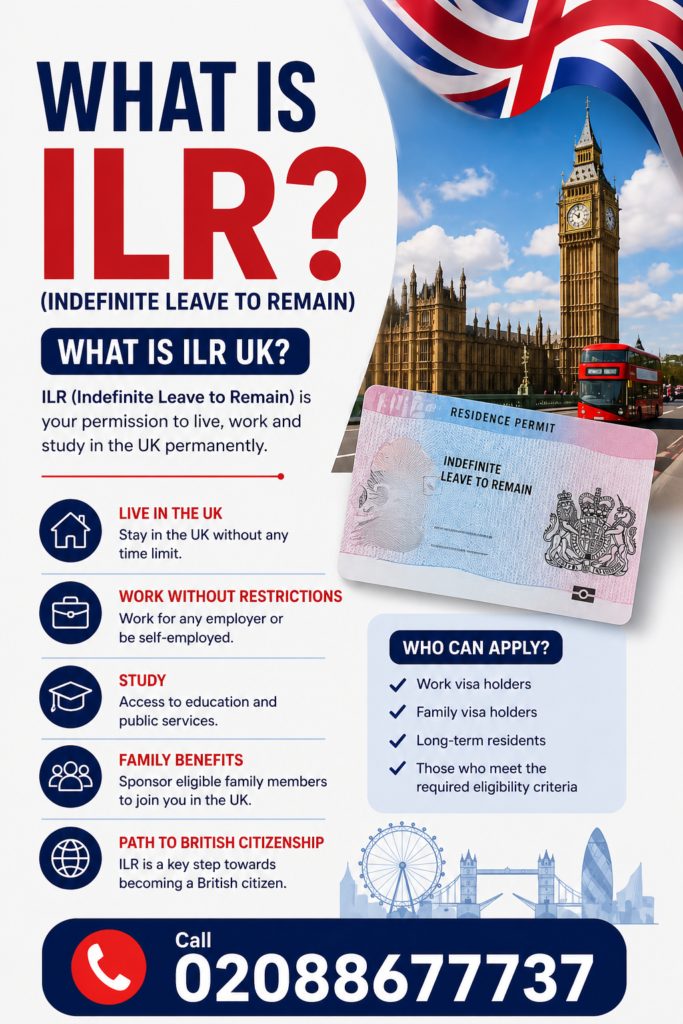
If you are living in the UK and planning to settle permanently (What is ILR (Indefinite Leave to Remain], you may have come across the term “Indefinite Leave to Remain” (ILR). But what exactly does it mean, and how can you apply for it successfully? In simple terms, ILR allows you to live, work, and study in the UK without any time restrictions. It is often considered the final step before applying for British citizenship. Understanding the process, requirements, and legal framework is essential to ensure a successful application. What is ILR (Indefinite Leave to Remain) Indefinite Leave to Remain is a form of permanent residence granted by the UK Home Office. Once granted, you are no longer subject to immigration control in the same way as visa holders. With ILR, you can: You can also apply for British citizenship after holding ILR for a qualifying period, usually 12 months. For official guidance, applicants should always refer to the UK government website (gov.uk), where the latest requirements and forms are available. What is ILR (Indefinite Leave to Remain) – Eligibility Eligibility for ILR depends on the immigration route under which you are applying. Common routes include: General requirements usually include: Each category has its own specific criteria, and even small errors can result in refusal. What is ILR (Indefinite Leave to Remain) – Documents Required A successful ILR application depends heavily on the quality of supporting documents. These may include: It is crucial that documents are consistent, accurate, and properly organised. Common Challenges in ILR Applications Many applicants face difficulties due to: These issues can lead to delays or refusals, making professional guidance highly advisable. Why Choose Asher & Tomar Solicitors for ILR Applications Applying for ILR is a significant step, and choosing the right legal representatives can make all the difference. At Asher & Tomar Solicitors, we have been assisting clients since 2008 with a wide range of immigration matters, including complex ILR applications. Our firm is known for: We understand that every case is unique. Whether you are applying under the 5-year route, long residence, or private life, we carefully assess your situation and guide you through every stage of the process. Please read our reviews before you contact us. Our goal is to maximise your chances of success while reducing stress and uncertainty, and we act in the best interest of our clients. Our firm is regulated by the Solicitors Regulation Authority (SRA). What is ILR (Indefinite Leave to Remain)?—Application Process The ILR application process generally involves: Processing times may vary depending on the application type and whether priority services are used. Frequently Asked Questions (FAQs) [What is ILR (Indefinite Leave to Remain)] 1. What is ILR (Indefinite Leave to Remain)? It is permanent residence in the UK, allowing you to live without immigration restrictions. 2. How long does it take to get ILR? Processing times vary but typically range from a few weeks to several months. 3. Can ILR be refused? Yes, applications can be refused if requirements are not met or documents are insufficient. 4. Can I travel after getting ILR? Yes, but long absences (usually over 2 years) may lead to loss of ILR status. 5. Do I need a solicitor for ILR? While not mandatory, professional advice significantly improves your chances of success. Final Thoughts (What is ILR (Indefinite Leave to Remain)) Understanding what is ILR (Indefinite Leave to Remain) is essential for anyone planning to settle permanently in the UK. While the process may seem straightforward, it involves strict legal requirements and detailed documentation. For accurate and up-to-date information, always refer to the official gov.uk website. However, given the complexity of immigration rules, seeking expert legal assistance is strongly recommended. If you are planning to apply for ILR, Asher & Tomar Solicitors are here to assist you with reliable, professional, and tailored legal support to help you achieve a successful outcome.
I need help for my partner to gain Indefinite Leave to remain.

We have come across lots of people/clients who have the question,”Partner Indefinite Leave to Remain UK” (I need help for my partner to gain indefinite leave to remain), therefore, we shed some light about it. Indefinite Leave to Remain (ILR) can be acquired if you are married to a British national or a person settled in the UK and you are able to provide evidence that you have been living with your British/settled partner in the UK continuously for the last 5 years. The basic requirements are as follows: I need help for my partner to gain Indefinite Leave to remain. – Understanding the Basics If you often find yourself thinking, “I need help for my partner to gain Indefinite Leave to remain.”, you are not alone. ILR is a significant step in the UK immigration journey as it allows a person to live, work, and study in the UK without time restrictions. It also acts as a pathway towards British citizenship. According to the official guidance available on GOV.UK, applicants must meet strict eligibility criteria, and even minor errors in documentation can lead to refusal. Therefore, understanding the requirements is essential before making an application. Partner Indefinite Leave to Remain UK. – Key Requirements To succeed in an ILR application under the spouse route, the following requirements must generally be met: 1. Relationship Requirement (Partner Indefinite Leave to Remain UK) You must be legally married to or in a civil partnership with a British citizen or a person settled in the UK. The relationship must be genuine and subsisting. 2. Continuous Residence (Partner Indefinite Leave to Remain UK) You must prove that you have lived together in the UK for at least 5 years. This is usually evidenced through: 3. Financial Requirement (Partner Indefinite Leave to Remain UK) The sponsoring partner must meet a minimum income threshold (currently £29,000 per annum in most cases). This ensures that the applicant will not rely on public funds. 4. English Language Requirement (Partner Indefinite Leave to Remain UK) Applicants must demonstrate English language ability, usually through an approved English test or recognised qualification. 5. Life in the UK Test (Partner Indefinite Leave to Remain UK) You must pass the “Life in the UK Test,” which assesses your knowledge of British history, culture, and society. I need help for my partner to gain Indefinite Leave to remain. – Documents You Will Need Many applicants say, “I need help for my partner to gain Indefinite Leave to remain.” because document preparation is one of the most challenging aspects. Commonly required documents include: Ensuring that documents are consistent, well-organised, and meet Home Office standards is crucial. I need help for my partner to gain Indefinite Leave to remain. – Common Reasons for Refusal Understanding potential pitfalls is just as important. Common reasons for refusal include: Even where applicants believe they meet all requirements, technical errors can still lead to refusal. I need help for my partner to gain Indefinite Leave to remain. – Why Legal Assistance Matters If you are thinking, “I need help for my partner to gain Indefinite Leave to remain.”, seeking professional legal assistance can make a significant difference. Immigration rules are complex and frequently updated, and applications must be prepared with precision. Experienced solicitors can: This greatly improves the chances of a successful outcome. I need help for my partner to gain Indefinite Leave to remain. – How to Apply Applications for ILR are made online through the official UK government website. You can find the relevant application process and guidance on GOV.UK. The process generally involves (partner indefinite leave to Remain UK): Processing times can vary, and priority services may be available for faster decisions. I need help for my partner to gain indefinite leave to remain. – Final Thoughts Many couples across the UK continue to ask, “I need help for my partner to gain Indefinite Leave to remain.” The process, while straightforward in principle, can become complicated due to strict evidential and legal requirements. ILR is a life-changing status that provides long-term security and opens the door to British citizenship. However, success depends on careful preparation, accurate documentation, and a thorough understanding of the Immigration Rules. If you are unsure about any part of the process, it is always advisable to seek professional guidance to avoid costly mistakes and delays. With the right approach and support, achieving Indefinite Leave to Remain for your partner is entirely possible. Our experienced immigration solicitors at Asher & Tomar Solicitors are regulated by the Solicitors Regulation Authority (SRA).